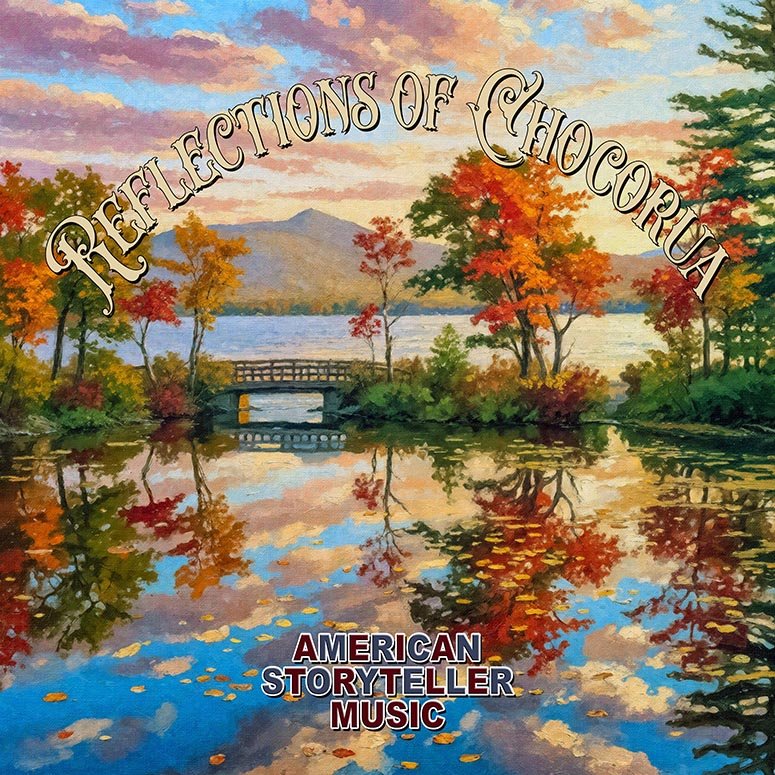
"Reflections of Chocorua©"
Lyrics by M. S. McKenzie (Unless Otherwise Noted) | Music Performed by Songs Across America or American Storyteller Music, All Songs Are Protected by ©
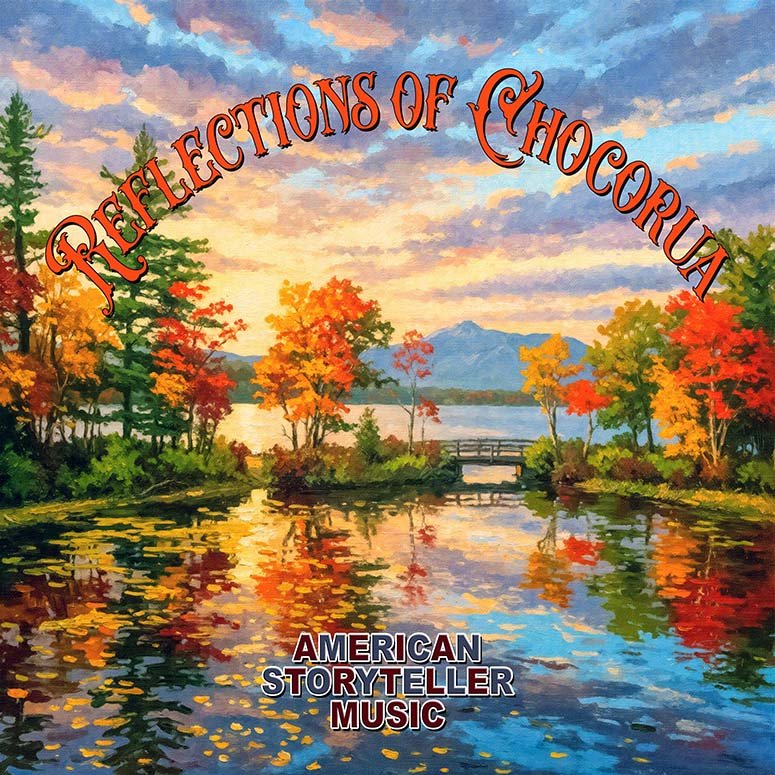
Streaming Services Music Link
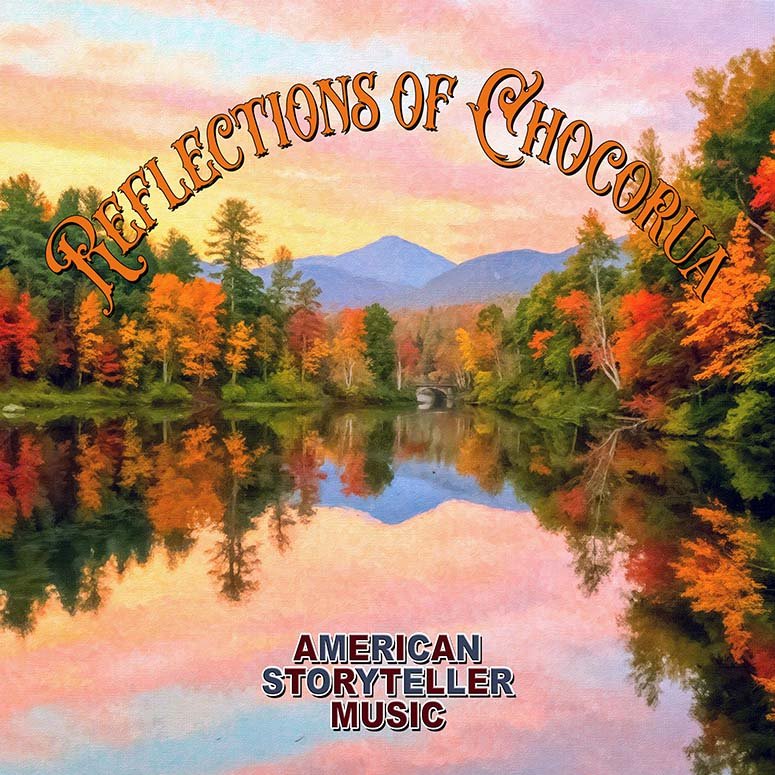
Streaming Services Music Link
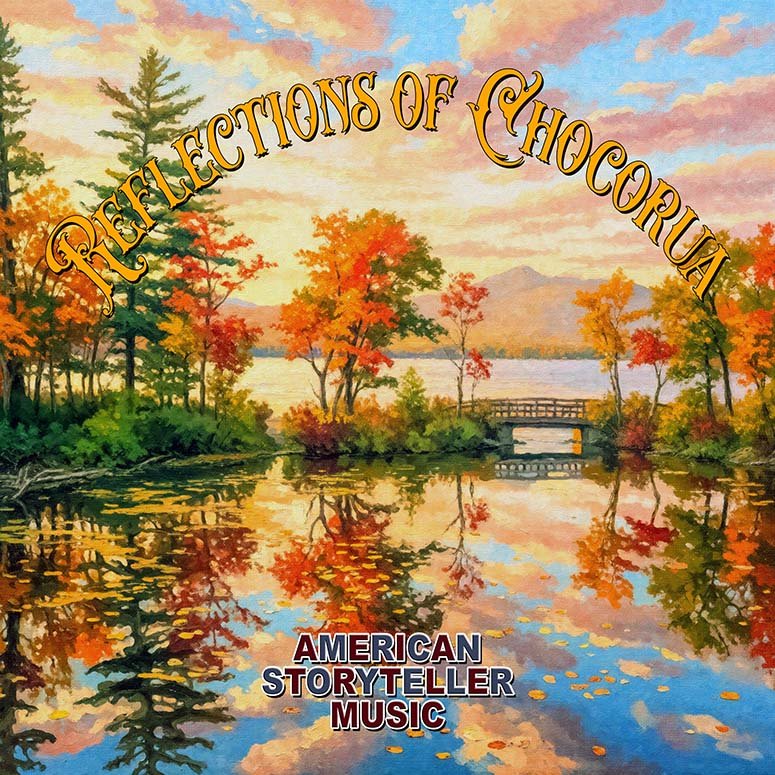
Streaming Services Music Link
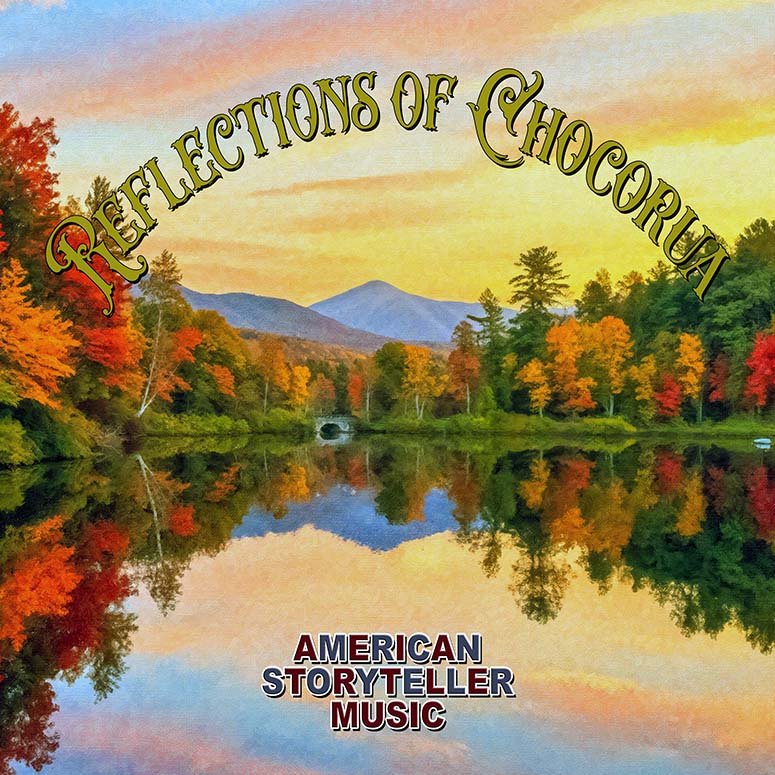
Streaming Services Music Link
Streaming Services Music Link
~ Associated State Links ~
[ NH Home Pg. | NH Gallery Pg. | NH Attractions | Best Small Towns | Best Small Cities ]
Why I Wrote This Song
I wrote "Reflections of Chocorua" for the specific stillness a person needs when they've lost track of who they are underneath everything that's gone wrong. I came here looking for what I had lost, to find a reason, to count the cost, opens the song without pretending the mountain will hand over an easy answer, only a place quiet enough to finally hear the question.
The story behind the song is how literally I let the lake do the reflecting, both the physical mirror of birches leaning over still water and the emotional reckoning of every choice and every turn played back at the narrator. Chocorua, clothed in the colors of the fall, just whispered quietly, as if it knew the heart of it all, because I wanted the mountain to feel like a patient witness rather than a healer handing out answers.
What I care about most is the line I learned that choice is a kind of will, because I wanted the peace this narrator eventually finds to come from something he actively claims rather than something the landscape simply gives him. Songs Across America has plenty of songs about places that heal people. This one is about a place patient enough to let a person do that work themselves, in its stillness rather than in spite of it.
Genre:
Reflective, sweeping folk ballad built on a violin-led instrumental passage and a searching, cathartic chorus, structured around a solitary autumn visit to a still mountain lake.
Theme:
Solitary reflection and self-discovery, a mountain lake as patient witness rather than healer, choice as an act of will, and peace claimed rather than given.
Primary Subject:
A person seeking clarity and peace beside Chocorua Lake in New Hampshire, reflecting on choices and losses that brought them there.
Mood:
Searching and melancholic at the outset, deepening into cathartic reflection, closing on quiet, self-claimed peace.
Core Message:
Sometimes we don't need a place to heal us so much as we need somewhere quiet enough to finally hear our own thoughts, and the peace we find there comes from choices we actively make, not from anything the landscape simply hands us.
"Reflections of Chocorua"
Original Song Lyrics: Written by M. S. McKenzie, All Rights Reserved
Why I Wrote This Song
I wrote "Reflections of Chocorua" for the specific stillness a person needs when they've lost track of who they are underneath everything that's gone wrong. I came here looking for what I had lost, to find a reason, to count the cost, opens the song without pretending the mountain will hand over an easy answer, only a place quiet enough to finally hear the question.
The story behind the song is how literally I let the lake do the reflecting, both the physical mirror of birches leaning over still water and the emotional reckoning of every choice and every turn played back at the narrator. Chocorua, clothed in the colors of the fall, just whispered quietly, as if it knew the heart of it all, because I wanted the mountain to feel like a patient witness rather than a healer handing out answers.
What I care about most is the line I learned that choice is a kind of will, because I wanted the peace this narrator eventually finds to come from something he actively claims rather than something the landscape simply gives him. Songs Across America has plenty of songs about places that heal people. This one is about a place patient enough to let a person do that work themselves, in its stillness rather than in spite of it.
Genre:
Reflective, sweeping folk ballad built on a violin-led instrumental passage and a searching, cathartic chorus, structured around a solitary autumn visit to a still mountain lake.
Theme:
Solitary reflection and self-discovery, a mountain lake as patient witness rather than healer, choice as an act of will, and peace claimed rather than given.
Primary Subject:
A person seeking clarity and peace beside Chocorua Lake in New Hampshire, reflecting on choices and losses that brought them there.
Mood:
Searching and melancholic at the outset, deepening into cathartic reflection, closing on quiet, self-claimed peace.
Core Message:
Sometimes we don't need a place to heal us so much as we need somewhere quiet enough to finally hear our own thoughts, and the peace we find there comes from choices we actively make, not from anything the landscape simply hands us.
[Intro]
I came here looking for what I had lost
To find a reason… to count the cost
The lake was still, the air was clear…
…and every sound just disappeared
[Extended instrumental blends into a sweeping violin solo]
[Verse 1]
By the edge of the lake where birches lean
I watched my past drift away like a dream
Every choice and every turn I've made
Reflected back at me in the alpine shade
Chocorua, clothed in the colors of the fall
Just whispered quietly…
…as if it knew the heart of it all
[Chorus]
Spirit of the mountain, show me who I am
Help me see beyond where my life began…
Let your stillness cleanse this restless mind
Till I leave this fear and doubt behind
In your crystal-clear waters, I find release
In your stark solitude, I find inner peace
[sweeping violin solo]
[Verse 2]
Hours slipped by me like a whispered song
The world I knew had done me wrong
And dreams I had were like dust on the floor
Dreams that don't seem to matter anymore
Here, along this shore:water so still
I learned that choice is a kind of will
[Chorus]
Spirit of the mountain, show me who I am
Help me see beyond where my life began…
Let your stillness cleanse this restless mind
Till I leave this fear and doubt behind
In your crystal-clear waters, I find release
In your stark solitude, I find inner peace
[Bridge]
Maybe life's not meant to be planned:
Like water slipping out of your hand
I can't change the tide or bend the light
But I can choose to set things right
[Verse 3]
Now evening settles into a golden hue
Can I find what is false and what is true?
A loon's call signals the end of the day
All grows still as the light fades away
I know that I must let it go, let it be
The road ahead is not for us to see
[Chorus]
Spirit of the mountain, show me who I am
Help me see beyond where my life began…
Let your stillness cleanse this restless mind
Till I leave this fear and doubt behind
In your crystal-clear waters, I find release
In your stark solitude, I find inner peace
[Chorus – Final / Reprise]
Oh, Chocorua, I see who I am
The road's still long, but I understand
Your wilderness heart beats wild and free
And that same heartbeat lives within me
A fair wind rises soft and sweet
In your stillness, I am complete
Why I Wrote This Song
Song Description
"Reflections of Chocorua" is a deeply introspective folk-rock and adult contemporary ballad about a person who travels to Lake Chocorua in New Hampshire seeking clarity after disappointment, regret, and emotional exhaustion. Surrounded by still water, autumn forests, mountain solitude, and the unmistakable profile of Mount Chocorua, the narrator begins to examine the choices that shaped his life and gradually accepts that peace does not come from controlling the future or rewriting the past. It comes from recognizing what can still be chosen in the present.
The title works on several levels. Most literally, it refers to Mount Chocorua reflected in the calm waters of the lake. The mountain's image appears on the surface as a nearly perfect mirror of the landscape above it. Symbolically, however, the lake also reflects the narrator back to himself. As he looks across the water, he is forced to consider his own history, identity, mistakes, hopes, and fears.
"Reflections" therefore refers not only to mirrored scenery but also to contemplation. The physical landscape becomes inseparable from the narrator's interior world. Chocorua is both a mountain and a silent witness, while the lake becomes a place where memory can be viewed with greater honesty.
The opening lines immediately establish that the journey has a personal purpose. The narrator has not come simply to admire the scenery or enjoy a peaceful day outdoors. He has come "looking for what I had lost," suggesting that something essential within him has disappeared beneath years of disappointment, compromise, or uncertainty.
The phrase "to find a reason… to count the cost" implies that he is evaluating what his past decisions have demanded from him. The cost may include lost time, failed ambitions, damaged trust, unrealized dreams, or the gradual erosion of confidence. He is trying to determine whether those sacrifices had meaning and whether the life he built remains worth continuing in its present form.
The stillness of the lake and clarity of the air immediately contrast with the confusion he carries inside. When "every sound just disappeared," the silence becomes almost complete. That silence is not empty. It creates the space in which thoughts that have been buried beneath noise, responsibility, and routine can finally surface.
The extended instrumental passage and sweeping violin solo allow the emotional atmosphere to deepen before the story continues. The violin can function almost as the narrator's unspoken voice, expressing grief, yearning, and uncertainty that cannot yet be articulated through words. Its melody should feel broad and searching, like a current of memory passing across the lake.
The first verse places the narrator at the water's edge beneath leaning birches. The birches bring delicacy and movement to the scene, while the lake remains nearly motionless. This visual contrast suggests that life continues shifting around him even as the moment itself feels suspended.
Watching the past "drift away like a dream" indicates that memories are beginning to lose some of their control over him. They have not vanished, but they are becoming less solid. Like reflections disturbed by a breeze, they can no longer be mistaken for the present.
The lines "Every choice and every turn I've made / Reflected back at me in the alpine shade" establish the song's central metaphor. The narrator sees his life as a series of roads, decisions, and turning points. Some may have led him forward, while others brought disappointment. In the shadow of the mountain, these choices appear before him without distraction or excuse.
Mount Chocorua is described as "clothed in the colors of the fall," placing the story during a season associated with beauty, maturity, transition, and approaching decline. Autumn is particularly appropriate for a song about reassessment. The leaves are brilliant because they are nearing the end of their cycle, creating beauty from change and impermanence.
The mountain "whispered quietly" as though it understood "the heart of it all." Chocorua does not literally answer the narrator, but its presence communicates something beyond language. The mountain has endured generations of human longing, ambition, grief, and renewal. Against its scale, one individual's struggles become both smaller and more understandable.
The chorus turns the mountain into a spiritual guide without necessarily making the song religious. "Spirit of the mountain, show me who I am" is a plea for self-knowledge. The narrator is not asking the mountain to solve his problems. He is asking the stillness of the place to help him see himself without distortion.
"Help me see beyond where my life began" expresses the desire to escape the limiting power of origin. A person's childhood, family history, early failures, economic circumstances, or past identity may influence the course of life, but they do not necessarily have to define its conclusion.
The narrator wants to see beyond the person he once was and beyond the circumstances that first shaped him. This makes the chorus not merely reflective but transformative. He is searching for evidence that identity remains open to revision.
"Let your stillness cleanse this restless mind" presents peace as a process of removal. The mountain does not add more information or advice. It helps strip away panic, noise, resentment, and repetitive thought. The narrator's mind has become restless because it is trapped between regret over the past and fear of the future.
The paired lines about crystal-clear water and stark solitude identify the sources of release. The clarity of the lake represents honesty, while the mountain's solitude provides freedom from outside expectations. Alone in the landscape, the narrator does not need to perform competence, optimism, or certainty for anyone else.
The phrase "inner peace" is earned rather than decorative. It does not mean that all his problems have disappeared. It means he is beginning to stop fighting realities he cannot change. That distinction becomes increasingly important as the song develops.
The sweeping violin solo after the chorus can serve as an emotional answer to the narrator's plea. The music may begin with longing, rise toward tension, and then resolve into a gentler phrase. This would suggest that the mountain's "response" comes through feeling rather than spoken language.
The second verse reveals more clearly why the narrator has come to Chocorua. Time passes almost unnoticed as he remains by the lake. "Hours slipped by me like a whispered song" suggests that he has entered a meditative state in which ordinary schedules and obligations lose their urgency.
"The world I knew had done me wrong" introduces hurt and possible bitterness. The narrator feels betrayed by circumstances, other people, institutions, or promises he once trusted. Yet the line is followed by a recognition that his old dreams no longer hold the power they once did.
The image of dreams becoming "dust on the floor" is deliberately unromantic. These ambitions have not exploded dramatically or ended in one decisive failure. They have gradually lost substance, becoming remnants of a former life. Once-important goals now appear neglected, broken down, or irrelevant.
"Dreams that don't seem to matter anymore" may initially sound defeated, but the line also creates room for liberation. Letting go of an obsolete dream does not necessarily mean surrendering hope. It may mean acknowledging that a former vision of success no longer fits the person he has become.
The still water along the shore becomes the setting for the song's first major realization: "choice is a kind of will." The line suggests that freedom does not require complete control over circumstances. Even when a person cannot determine the outcome, choosing a direction remains an expression of inner strength.
The phrasing distinguishes choice from certainty. A person can choose without knowing whether the decision will succeed. The act of choosing is itself a refusal to remain spiritually passive.
The second chorus returns with a slightly altered emotional meaning. The first chorus is a plea spoken from confusion. The second comes after the narrator recognizes that he still possesses some power over his life. The mountain is no longer being asked to rescue him but to help him strengthen an emerging understanding.
The bridge states the song's philosophy with unusual simplicity. "Maybe life's not meant to be planned" challenges the belief that fulfillment depends upon controlling each stage of one's future. Plans can provide direction, but they can also create suffering when reality refuses to follow them.
The comparison to water slipping through a hand expresses the futility of trying to hold life too tightly. The harder a person grips water, the faster it escapes. In the same way, relentless attempts to control time, relationships, success, or identity may create more loss rather than security.
"I can't change the tide or bend the light" acknowledges the limits of personal power. The narrator cannot reverse the past, force other people to behave differently, or command the natural course of events. These are not statements of helplessness but of realism.
The bridge then turns toward responsibility: "But I can choose to set things right." This is the central moral insight of the song. Acceptance does not mean passivity. The narrator may not control the world, but he can still apologize, change direction, release resentment, repair what remains repairable, and live more honestly.
The difference between control and choice is crucial. Control demands a particular outcome. Choice concerns how a person responds. By recognizing this distinction, the narrator begins to recover agency without returning to the illusion that life can be perfectly managed.
The third verse moves into evening, signaling that the day of reflection is nearing its conclusion. The golden light gives the landscape warmth and suggests that the narrator's inner state has begun to soften.
His question, "Can I find what is false and what is true?" shows that he is still uncertain. The song does not give him instant or total enlightenment. Instead, it presents self-understanding as an ongoing process of separating inherited beliefs, fear-based assumptions, genuine desires, and painful truths.
The call of a loon marks the end of the day. Like the loons in many northern landscapes, its voice is haunting, distant, and emotionally ambiguous. It may sound mournful, but it also belongs completely to the place. The call signals transition without explanation.
As the light fades, the environment becomes still once more. Morning stillness allowed the narrator's questions to emerge. Evening stillness allows him to release the demand for complete answers.
"I know that I must let it go, let it be" expresses acceptance of what cannot be changed. The repetition of "let" gives the line a gentle, deliberate rhythm, as though he is practicing release rather than achieving it all at once.
"The road ahead is not for us to see" returns to the song's theme of uncertainty. Earlier, uncertainty was a source of fear. By this point, it has become a condition he can live with. The future remains hidden, but he no longer sees that hiddenness as proof that he is lost.
The third chorus is therefore less a request than a confirmation. The narrator repeats the language that guided him through the day, but the words now carry greater confidence. He is beginning to understand that the peace he sought was not hidden somewhere in the mountain. The landscape helped him recognize a capacity for peace already present within himself.
The final reprise completes that transformation. Instead of asking the mountain to show him who he is, he declares, "Oh, Chocorua, I see who I am." The shift from question to recognition gives the song its emotional resolution.
"The road's still long, but I understand" avoids an unrealistically perfect ending. His problems are not over, and his future is not fully known. What has changed is his relationship to that uncertainty. He can continue without requiring a complete map.
The mountain's "wilderness heart" beats "wild and free," suggesting independence, endurance, and authenticity. The narrator then recognizes that the same heartbeat exists within him. The qualities he admired in the landscape were not entirely separate from his own nature.
This realization resolves the song's central division between the person and the place. At the beginning, he came to Chocorua seeking something he believed he had lost. By the end, he discovers that the mountain has reflected back a part of himself that was obscured but never destroyed.
The rising fair wind introduces movement after a day dominated by stillness. It suggests that he is ready to leave the lake and continue his journey. The wind is soft and sweet rather than threatening, indicating that change no longer feels entirely dangerous.
"In your stillness, I am complete" is not a claim that the mountain has permanently removed every flaw or fear. It describes a moment of integration. For once, he is not divided between the life he planned, the life he lived, and the person he believes he should have become.
Musically, "Reflections of Chocorua" is well suited to a cinematic folk-rock, adult contemporary, or orchestral Americana arrangement. Piano or fingerpicked acoustic guitar could establish the opening atmosphere, accompanied by subtle strings and natural ambience.
The violin should play a central role. Rather than functioning only as decorative accompaniment, it can represent the emotional voice of the mountain and lake. Its recurring melody could begin tentatively in the introduction, grow more expressive after the first chorus, and return in fuller form during the outro.
The verses should remain intimate, with enough space around the vocal for the words to feel contemplative. Acoustic guitar, piano, cello, and light percussion would support the storytelling without disturbing the sense of stillness.
The chorus should broaden through layered strings, sustained harmony vocals, and a gentle rhythmic lift. It should feel emotionally expansive but not triumphant. The narrator is seeking release, not conquering the mountain.
The bridge could reduce the arrangement to piano, acoustic guitar, and voice, placing emphasis on the contrast between what cannot be controlled and what can still be chosen. The instrumentation could then gradually rebuild beneath "I can choose to set things right."
The final reprise should provide the song's strongest musical expansion. Sweeping strings, fuller drums, vocal harmonies, and the return of the violin theme could convey the narrator's inner breakthrough. The final line should then settle into a calmer resolution rather than ending with excessive force.
The instrumental outro offers an opportunity for the string section to restate the central melody without words. The violin might rise briefly and then descend into a sustained final chord, like the last light disappearing behind the mountain.
At its heart, "Reflections of Chocorua" is a song about recovering personal agency without pretending that life can be controlled. It recognizes that the past cannot be rewritten and the future cannot be fully seen, but the present still contains choices.
The song also captures the restorative effect of a meaningful landscape. Chocorua does not erase grief or provide supernatural answers. Its stillness allows the narrator to hear truths that were already present but overwhelmed by fear and disappointment.
The lake reflects the mountain, the mountain reflects the narrator, and the narrator finally sees himself with greater clarity. What begins as a journey in search of something lost becomes a recognition that his essential self remains alive beneath regret, abandoned dreams, and uncertainty.
"Reflections of Chocorua" is therefore both a New England landscape song and a universal meditation on reinvention. Its emotional power comes from the idea that inner peace is not found by seeing the entire road ahead. It is found by accepting what cannot be known, choosing what can still be changed, and recognizing the wild, enduring spirit that remains within.












.jpg)