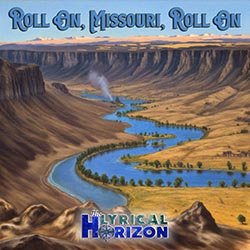
"Roll On, Missouri, Roll On©"
Lyrics by M. S. McKenzie (Unless Otherwise Noted) | Music Performed by Songs Across America or American Storyteller Music, All Songs Are Protected by ©
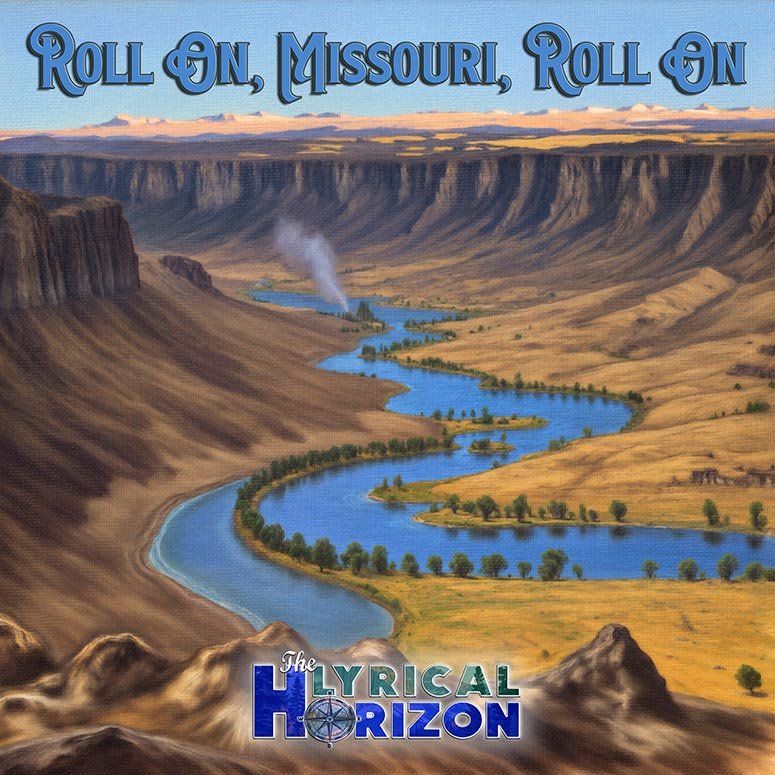
~ Six State are Associated With This Song ~
I wrote "Roll On, Missouri, Roll On" to trace the Missouri River from its literal birthplace, the meeting of the Gallatin, Madison, and Jefferson at Three Forks, all the way to its embrace with the Mississippi, because I wanted the song to follow the actual physical route of the longest river in the country rather than treating it as a static feature of any one state.
The story behind the song is how much history I let the river carry alongside its geography, Mandan earth-lodges watching the water shimmer, Lewis and Clark and Sacajawea following its winding path, steamboat whistles later echoing across the same water. I wanted the river to feel like the connective thread running through this country's westward story, carrying fur traders and explorers and settlers all on the same current, at different points in time.
What I care about most is the bridge's claim, you bend but never break, teaching us all how to survive, because I wanted the river's actual behavior, gathering snow from the Rockies, tears from the sky, cutting through limestone, carving canyons, to become a kind of instruction. Songs Across America has plenty of songs about mountains and coastlines. This one is for the interior river that quietly carries the whole middle of the country.
Sweeping, cinematic Americana river ballad built on a steady, rolling chorus, structured as a journey down the Missouri from its Montana headwaters to its Mississippi confluence.
The Missouri River as connective history, Lewis and Clark's expedition and Native American presence along its banks, endurance modeled by the river's own persistence, and the interior heartland's often overlooked grandeur.
Primary Subject:
The Missouri River, from its birthplace at Three Forks, Montana, through the Dakotas' badlands to its meeting with the Mississippi.
Mood:
Reverent, steady, and quietly enduring throughout.
A river that bends without breaking, carving canyons and carrying centuries of history on the same current, can teach us something about endurance simply by continuing to flow.
"Roll On, Missouri, Roll On"
[Intro]
A morning mist rises over a Three Forks dawn
As the Gallatin Madison and Jefferson sing as one
A gentle light spills across cottonwood islands
As the Big Muddy begins its long and winding run
[Verse 1]
She cuts through limestone walls at Gates of the Mountains
While the echoed cries of bald eagles ride the early morning air
From Fort Benton’s old wood docks to wheat fields far beyond
The great Missouri River carries stories only time can share
[Chorus]
Roll on Missouri ... (roll on) keeper of prairies and plains
You carved great canyons before you watered the grain
From your Rocky Mountain cradle to the Mississippi's embrace
Your restless winding current writes the heartbeat of this place
[Verse 2]
Mandan earth-lodges once watched your silver ribbon shimmer
While Lewis and Clark and Sacajawea followed your winding path
Then steamboat whistles echoed across your wide expanse
Trading big city dreams for furs and freedom in the prairie grass
[Verse 3]
Through Fort Peck Lake’s wide expanse of water
Then past the Badlands of North and South Dakota
Where Lake Oahe mirrors a red hawk on the wing
And sandhill cranes and cowboys come together to sing
[Bridge]
You gather snows from the Rockies, tears from an endless sky
You bend but never break ...
...teaching us all how to survive
In every flood and drought ...
...in every shining bend
We learn that all we ever build must flow and start again
[Verse 4]
Loess Bluffs rise abruptly above your muddy waters
While the thirsty fields of the Great Plains drink your gold-silt rain
At Council Bluffs gamblers and dreamers crossed over
Then St Louis lanterns watched you meet the Mississippi plain
[Chorus]
Roll on Missouri ... (roll on) keeper of prairies and plains
You carved great canyons before you watered the grain
From your Rocky Mountain cradle to the Mississippi's embrace
Your restless winding current writes the heartbeat of this place
[Outro]
Night settles soft ... fireflies drift by the levee
Your low hush carries cottonwood song
We stand on your banks and feel the ages moving
Flow on Missouri ... flow ever strong
"Roll On, Missouri, Roll On" is an expansive river ballad tracing the Missouri from its headwaters in Montana to its meeting with the Mississippi near St. Louis. The song presents the river as a geographical force, historical corridor, ecological system, and symbol of endurance. As the Missouri flows across the northern plains, it gathers the stories of Indigenous nations, explorers, steamboat crews, farmers, migrants, wildlife, towns, and changing generations.
The introduction begins at Three Forks, where the Gallatin, Madison, and Jefferson rivers join to form the Missouri. Morning mist, cottonwood islands, and soft light create a peaceful beginning for a river that will eventually become broad, muddy, powerful, and heavily engineered.
The description of the three tributaries singing as one gives the headwaters a musical quality. Separate waters merge into a single identity, much as separate landscapes, peoples, and histories become connected by the Missouri's course.
Calling it the "Big Muddy" introduces the river's familiar character. Its sediment-rich water carries soil and minerals across the plains, continually shaping banks, islands, floodplains, and channels. The river begins gently, but its long journey will take it through canyons, reservoirs, agricultural country, cities, and leveed lowlands.
The first verse follows the river through the Gates of the Mountains, where it passes between dramatic limestone walls. Eagle cries echo through the canyon, emphasizing the vertical scale and natural acoustics of the passage.
Fort Benton introduces the Missouri's importance as a transportation route. Its docks once connected steamboat traffic with overland trails and distant settlements. The transition from the old waterfront to surrounding wheat fields shows how the river linked wilderness travel, commercial expansion, settlement, and agriculture.
The line "carries stories only time can share" establishes the Missouri as the song's narrator and keeper of memory. Water has passed the same banks through countless generations, witnessing changes no individual person could observe.
The chorus gives the river a direct command: "Roll on Missouri." This phrase belongs to the tradition of great American river songs in which flowing water becomes a symbol of persistence, distance, freedom, and national memory.
The Missouri is called the "keeper of prairies and plains" because it drains, shapes, and sustains an enormous part of the interior United States. It carved canyons long before fields of grain appeared along its course. This sequencing places geological time before agricultural development.
The journey from a Rocky Mountain cradle to the Mississippi's embrace gives the river a complete life arc. It is born in high country, matures across the plains, and joins a larger river system that eventually reaches the Gulf of Mexico.
"Your restless winding current writes the heartbeat of this place" is the chorus's central metaphor. The river writes physically through erosion and sediment, historically through movement and settlement, and emotionally through the lives formed along its banks.
The second verse moves into Indigenous and exploration history. Mandan earth lodges once overlooked the river, representing established communities, agriculture, trade networks, and cultural life that existed long before American expeditions entered the region.
The Missouri was not an empty route awaiting Lewis and Clark. It was already known and traveled by Native nations. The reference to Sacagawea recognizes her essential role, although her name is commonly standardized as **Sacagawea** in modern usage.
Steamboat whistles mark a later historical period when the river became a major commercial highway. Boats carried passengers, machinery, manufactured goods, military supplies, mail, and dreams of expansion upstream, while furs and agricultural products moved in the opposite direction.
The phrase "trading big city dreams for furs and freedom" captures both the promise and mythology of the frontier. Some travelers sought wealth, others reinvention, and others escape from established society. The prairie grass became associated with possibility, though that expansion also brought conflict, displacement, and profound change for Indigenous communities.
The third verse enters the reservoir country of the upper Missouri. Fort Peck Lake represents the modern transformation of the river through dams and water management. The natural current becomes an immense body of controlled water stretching across Montana.
The journey continues past the badlands of North and South Dakota. Eroded cliffs and layered formations create a visual contrast with the broad reservoirs and river valleys. Lake Oahe reflects a red hawk overhead, bringing a moment of stillness to a river altered by engineering.
The reference to sandhill cranes and cowboys creates a meeting between wildlife migration and human culture. The river corridor supports birds, ranches, towns, farms, and recreation. These communities may appear separate, but they remain connected by water.
The bridge turns from geography and history toward philosophy. The Missouri gathers mountain snow and rain from enormous watersheds. "Tears from an endless sky" gives precipitation emotional weight, as though the river carries both the abundance and hardship of the regions it crosses.
"You bend but never break" uses the river as a model of resilience. Water survives by adapting. It turns around obstacles, overflows boundaries, disappears into drought, returns with rain, and continually searches for a path forward.
The lines about flood and drought acknowledge that the Missouri is neither consistently gentle nor fully controllable. It sustains life but can also destroy homes, fields, roads, and levees. Communities along the river have repeatedly rebuilt after changes in water level and course.
"We learn that all we ever build must flow and start again" is the song's deepest philosophical statement. Human structures and plans are temporary. Rivers reveal the limits of control and teach that survival often depends on flexibility, renewal, and acceptance of change.
The fourth verse reaches the lower Missouri. Loess bluffs rise above the river, their wind-deposited soils forming dramatic walls and fertile agricultural lands. The muddy water carries sediment that has helped create productive floodplains.
The Great Plains drink the river's "gold-silt rain," portraying sediment and irrigation as forms of wealth. The river sustains crops and communities, though the phrase also hints at the dependence of agriculture on uncertain water.
Council Bluffs recalls westward migration, commerce, speculation, gambling, railroads, and people crossing toward imagined opportunity. The travelers are called both "gamblers and dreamers" because westward movement often required risk, ambition, and faith in an uncertain future.
St. Louis provides the historical and geographical conclusion. Lanterns watch as the Missouri reaches the Mississippi, completing its independent course while continuing through the waters of a greater river.
The outro returns to intimacy. Night falls, fireflies drift beside the levee, and cottonwoods respond to the low sound of moving water. After crossing mountains, plains, reservoirs, badlands, farms, and cities, the song ends with people quietly standing on the bank.
"We stand on your banks and feel the ages moving" summarizes the emotional power of great rivers. Flowing water makes time visible. The current arriving in one moment immediately passes away, replaced by new water from upstream.
Musically, "Roll On, Missouri, Roll On" would work well as a broad Americana river anthem. Acoustic guitar, piano, harmonica, fiddle, bass, and steady drums could support the journey. The chorus should feel strong and open, with a response vocal repeating "roll on."
The verses could gradually expand in instrumentation as the Missouri grows from mountain headwaters into a major continental river. The bridge should become more emotionally intense, while the outro should return to a quieter arrangement of guitar, piano, or harmonica.
At its heart, "Roll On, Missouri, Roll On" is about continuity. Civilizations, boats, forts, farms, and cities rise and change along the banks, but the river keeps moving. It carries both achievement and loss, linking the Rocky Mountains to the Mississippi and generations of American life to one another.










.jpg)



.jpg)