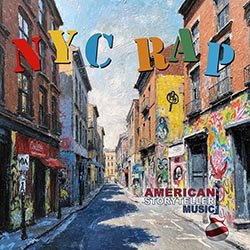
"NYC Rap©"
Lyrics by M. S. McKenzie (Unless Otherwise Noted) | Music Performed by Songs Across America or American Storyteller Music, All Songs Are Protected by Copyright

~ Associated State Links ~
State of NY Home Page | State of NY Gallery Page
Original Song Lyrics: Written by M. S. McKenzie, All Rights Reserved
"NYC Rap"
[Intro]
Taxi lights blink time in a rain‑slick lane,
Steel tracks hum and they spell my name.
Boom‑bap heartbeat under midnight sky,
Six‑strings snarl while the pigeons fly.
I cut through steam with a borough‑born swagger,
Home is a hustle:native New Yorker, no stagger.
[Verse 1: Manhattan]
Times Square glare paints chrome on my jaw,
High Line breeze where the freight ghosts saw.
Central Park lungs put air in my chest,
LES basements shake dust from the rest.
SoHo glass drips neon and nerve,
Harlem brass bends notes that curve.
I ride the grid like a riff I wrote,
Skyscrape choir puts gold in my throat.
[Chorus]
I’m a native New Yorker, pulse on the two and four,
Hip‑hop backbone with an R&B core.
Rock‑edge truth with a Pop‑light shine,
Four‑borough rhythm in a straight skyline.
From block‑party sparks to a rooftop roar,
I’m stitched to the city, I’m asking for more.
Native New Yorker:bet that on the beat,
This town in my sneakers, these miles on my feet.
[Verse 2: Brooklyn]
Bridge cables hum like a low‑tuned string,
DUMBO bricks echo everything I bring.
Bed‑Stuy stoops trade stories and heat,
Coney salt keeps the snare off‑beat.
Barclays thunder when the hook lands clean,
Flatbush pepper pots season the scene.
Bushwick murals spit color and chrome,
Williamsburg vinyl spins “you’re home.”
[Verse 3: Queens]
Seven line violet, horizon in view,
Jackson Heights spices cut bold and true.
Astoria taverns sing old‑world hooks,
Flushing night markets rewrite the books.
LIC glass splits sunsets in two,
Rockaway breakers keep time for the crew.
Queensboro strings draw silver lines,
I count my blessings between those signs.
[Bridge: Halftime feel, wider world colors]
Rain taps time on a rusted gate,
Bills stack high but so does fate.
We bend, don’t break; we shape, we learn,
Turn cold to fire, watch corners burn.
Tabla whispers, oud replies,
Erhu sighs where the skyline lies.
I breathe this mix and the mix breathes back:
Cut the lights, feel the track.
[Verse 4: Bronx]
Blueprint borough where the first spark lit,
Grand Concourse stride with a brass‑band grit.
Yankee lights blaze on a shout‑back night,
Orchard Beach laughter keeps tempo light.
Fordham rush sings a rush‑hour key,
City Island hush hums over the sea.
Pelham Bay breeze on a hustler’s sleeve,
If you know this rhythm, you’ll never leave.
[Chorus]
I’m a native New Yorker, pulse on the two and four,
Hip‑hop backbone with an R&B core.
Rock‑edge truth with a Pop‑light shine,
Four‑borough rhythm in a straight skyline.
From block‑party sparks to a rooftop roar,
I’m stitched to the city, I’m asking for more.
Native New Yorker:bet that on the beat,
This town in my sneakers, these miles on my feet.
[Outro]
Last slice steam, ferry horn low,
Turnstile ticks where the night trains go.
Streetlamp chorus, river in tune:
City says “now,” so I answer “soon.”
Fade on the hum of a midnight track:
Native New Yorker, I’ll always come back.
Song Description
“NYC Rap” reads like a five-borough postcard written on the back of a snare drum: part love letter, part origin story, part walking tour: where the narrator’s identity isn’t in New York so much as made of it. The lyric succeeds because it doesn’t just name places; it assigns each neighborhood a sonic job in the arrangement, turning geography into instrumentation. Every section feels like it’s been mapped to a different texture (boom-bap, R&B warmth, rock guitar bite, pop gloss), but the voice stays consistent: confident, kinetic, and deeply local.
Intro: the city as metronome, the narrator as instrument
The opening couplets establish a thesis: New York is a rhythm machine, and the rapper is one of its moving parts.
-
“Taxi lights blink time in a rain-slick lane” frames the city as a visual click track: lights as tempo markers, rain as sheen. The phrase “blink time” is especially strong: it implies timekeeping, not just atmosphere.
-
“Steel tracks hum and they spell my name” flips infrastructure into identity. The trains aren’t background noise; they’re calling the narrator into being.
-
The punch is the hybrid swagger line: “Boom-bap heartbeat… / Six-strings snarl…”. That’s the project’s sonic DNA in two strokes: classic hip-hop foundation with a rock-guitar attitude. You can almost hear a gritty loop under a distorted guitar stab.
-
“Home is a hustle:native New Yorker” is a mission statement. The compressed punctuation (“hustle:native”) mirrors city compression: everything jammed together, no wasted space.
Verse 1 (Manhattan): vertical glamour, subterranean bass
Manhattan gets depicted as both spectacle and pressure system: bright above, shaking below.
-
Times Square is presented as reflective armor: “glare paints chrome on my jaw”. The city literally coats the speaker, making them shinier and harder.
-
The High Line “freight ghosts” line is a clever historical echo: a walkway built on old industry becomes a place where the past still “saw” (worked, cut, shaped). It’s an image of reinvention without forgetting origins.
-
Central Park becomes physiology: “lungs”: which makes Manhattan feel like a body the narrator depends on.
-
The LES basements line hints at the city’s music incubators: small rooms, big vibrations: where scenes form in the dark.
-
“Harlem brass bends notes that curve” is a gorgeous synesthetic moment: it nods to jazz lineage and makes the music physically pliable. Manhattan isn’t just straight lines and grids; it curves through culture.
-
The closer: “I ride the grid like a riff I wrote”: is key to the song’s stance: the narrator isn’t overwhelmed by New York; they compose with it. The grid becomes a guitar figure, the skyline a choir.
Chorus: identity manifesto with genre-fusion clarity
The chorus works because it’s both brand statement and arrangement guide.
-
“Pulse on the two and four” grounds everything in backbeat universality, instantly translatable to boom-bap, R&B, and rock. It’s musical language that says: this groove is human; this groove is home.
-
The stacked genre claims: hip-hop backbone / R&B core / rock-edge truth / pop-light shine: read like layers in a mix: drums first, then soul, then bite, then gloss. It’s an unusually producer-aware chorus.
-
“Four-borough rhythm” is interesting because the song clearly covers more than four boroughs (Manhattan, Brooklyn, Queens, Bronx). The “four” lands like an intentional simplification: almost like saying the city’s essence is a tight set of pillars. It also keeps the line punchy and rhythmic.
-
The payoff couplet: “This town in my sneakers, these miles on my feet”: anchors the bravado in physical labor. The city isn’t owned by money or views; it’s owned by walking it.
Verse 2 (Brooklyn): grit, art, and salt air syncopation
Brooklyn’s verse emphasizes vibration: bridges, bricks, arenas, murals: plus a coastal looseness.
-
“Bridge cables hum like a low-tuned string” continues the guitar motif: infrastructure as instrument. “Low-tuned” suggests heaviness and modernity, like a dropped-D rock tone against boom-bap drums.
-
DUMBO, Bed-Stuy, Bushwick, Williamsburg each get a distinct function:
-
DUMBO bricks = echo chamber (history + reverb).
-
Bed-Stuy stoops = narrative exchange (storytelling and heat).
-
Bushwick murals = visual rap (color and chrome as lyric).
-
Williamsburg vinyl = homecoming signal (taste, roots, playback culture).
-
The standout rhythmic idea is “Coney salt keeps the snare off-beat.” That’s a musician’s line: ocean air making the groove swing, the city’s grit literally pushing the percussion out of perfect alignment. It makes Brooklyn feel alive, not quantized.
Verse 3 (Queens): the world in one borough, melody in motion
Queens becomes the song’s multicultural engine: speed, spice, markets, water, and horizon.
-
The 7 train (“Seven line violet”) is treated like a ribbon toward possibility: horizon in view. Queens is movement and arrival.
-
Jackson Heights spices, Flushing night markets, Astoria taverns: you’re not describing postcard New York; you’re describing how people actually live: eating, gathering, carrying traditions forward.
-
LIC glass splits sunsets in two mirrors Manhattan’s glass but with a softer purpose: less corporate flash, more evening reflection.
-
Rockaway breakers keep time ties Queens back to the song’s core conceit: everything in this city is percussion if you know how to listen.
-
The closer: “I count my blessings between those signs”: humanizes the flex. It’s gratitude squeezed into commute space, like prayer between stations.
Bridge: halftime introspection + global instrumentation as New York’s thesis
The bridge is where the song widens from local brag to city philosophy. Halftime implies the beat drops into a heavier pocket: space for reflection.
-
The first half is survival economics without melodrama: bills stack, fate stacks too; resilience is the borough religion.
-
Then the instrumentation becomes the point: tabla / oud / erhu. This is New York as a living remix: immigrant music braided into street rhythm. The choices aren’t random:
-
Tabla = intricate rhythmic intelligence (fits hip-hop’s percussive obsession).
-
Oud = warm, ancient melodic body (fits R&B’s emotional center).
-
Erhu = aching, lyrical cry (fits the song’s “steel tracks hum” melancholy).
-
“I breathe this mix and the mix breathes back” is one of the most conceptually strong lines in the lyric: it frames culture as reciprocal, not extracted. The city shapes you, and you shape it.
Verse 4 (Bronx): origin point, legacy, and the soft edge of the hard place
The Bronx verse carries historical weight while keeping the tone celebratory.
-
“Blueprint borough where the first spark lit” points to hip-hop’s birthplace without turning into a lecture. It’s mythic but grounded.
-
Grand Concourse and brass-band grit blend old New York grandeur with street-level toughness.
-
The swing between Yankee lights and City Island hush is a smart contrast: fame and quiet coexisting within the same borough, like the city’s constant mood swings.
-
Pelham Bay breeze on a hustler’s sleeve echoes the earlier “Central Park lungs” image: nature touching the working body.
-
The final line: “If you know this rhythm, you’ll never leave” seals the song’s argument: belonging is rhythmic knowledge. Not residency: rhythm literacy.
Outro: small rituals, big inevitability
The outro nails the everyday romance: slice steam, ferry horn, turnstiles, streetlamps, rivers. It’s all ordinary, which is why it hits.
-
“City says ‘now,’ so I answer ‘soon.’” That’s the most New York emotional truth in the whole piece: urgency outside, intention inside. The city demands immediacy; the narrator promises return.
-
Ending on “Native New Yorker, I’ll always come back” reframes the bravado as devotion. The flex isn’t dominance: it’s loyalty.
What makes it work (craft notes)
-
Sonic coherence through metaphor: Tracks, cables, brass, breakers: every image doubles as sound design.
-
Local specificity without trivia dumping: You name places, but you attach texture and emotion to them.
-
A believable narrator: Confident, yes, but also grateful, tired, resilient: never cartoonish.
-
Genre fusion is justified in the text: The chorus doesn’t just claim hip-hop/R&B/rock/pop; the imagery (boom-bap + six-strings + brass + global instruments) earns it.
If you want, I can also give you: (1) a music-critic “review” version with more production language (mix choices, cadence, hook mechanics), or (2) a tighter website-ready description that reads like liner notes.






.jpg)