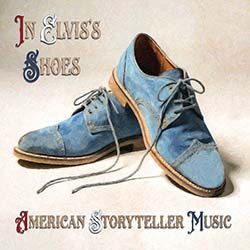
"In Elvis's Shoes©"
Release Date: July 29th, 2025
Lyrics by M. S. McKenzie (Unless Otherwise Noted) | Music Performed by Songs Across America or American Storyteller Music, All Songs Are Protected by ©
~ Associated State Links ~
"In Elvis's Shoes"
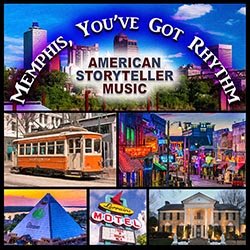
I wrote "In Elvis's Shoes" for the specific kind of failure that isn't really a failure, just a wrong city. This is a musician who couldn't make it in Nashville, dreams and money both run dry, and instead of giving up on music entirely, he gets on a bus down Highway 51 toward Memphis, chasing something Nashville never had for him. I wanted the song to honor that instinct, that sometimes the answer isn't quitting, it's finding the place that was actually built for what you do.
The story behind the song is what happens on Beale Street, where he swears he hears the spirit of the King whispering as he passes the tracks. I didn't want to write that moment as literal, or even resolve whether it was real. I didn't care if it was wrong, I didn't care if it was right is exactly the point, the feeling of finally being somewhere sacred to your own art mattered more to him than whether that feeling could survive close inspection.
What I care about most is the chorus's declaration, Memphis gave me something sacred, something strange, but something true, because I wanted this to be a song about a city actually saving a career and a spirit that Nashville had worn down. Songs Across America has plenty of songs about chasing a dream. This one is about the specific relief of discovering the dream just needed a different address.
Rockabilly-infused roots rock at 145 BPM in C Major, built on a driving, retro chorus that channels early Elvis energy, structured as a journey from Nashville's disappointment to Memphis's redemption.
Musical reinvention through place, Memphis and Beale Street as sacred artistic ground, Elvis's enduring spirit as inspiration, and the relief of finally belonging somewhere.
Primary Subject:
A musician who couldn't make it in Nashville finding renewed purpose and belonging on Beale Street in Memphis.
Mood:
Weary and defeated at the opening, awestruck at Beale Street, and closing on grateful, rejuvenated joy.
Sometimes failure isn't really failure, it's just the wrong place for what you're trying to become. Finding the city, the room, or the community that was actually built for your particular gift can save a spirit that a wrong fit was slowly wearing down.
[Intro:]
I hit bottom back in Nashville…
…my dreams and my money ran dry
My voice was once full of fire…
…now it’s just askin’ why oh why
Then I boarded an out-of-town bus…
…and headed down Highway 51
Down south to the city of Memphis…
…down south to chase the ‘One’
[Verse 1:]
I walked down Beale, past Main…
…there was a rhythm in the cracks
I swear I heard the spirit of the King
…whisperin’ to me as I passed the tracks
The neon hummed above Orpheum’s door
…like it knew what I was really lookin’ for
Then I stood at the foot of his statue…
…where I looked up and saw the light
I didn’t care if it was wrong…
…I didn’t care if it was right
[Chorus:]
Yeah I’m singin’ in my “Blue Suede Shoes”
From “Heartbreak Hotel” to the rockabilly blues
No, I couldn’t make it in Nashville…
…but honey, I sure ain’t through
‘Cause Memphis gave me somethin’ sacred
…somethin’ strange, but somethin’ true
So every Friday I’m channeling’ “Moody Blue”
…right here in the City of Memphis
…right here in Elvis’s shoes
[Verse 2:]
Sun Studio called out to me like a sacred hymn
…I heard the Colonel say, “Come right on in”
I was surrounded by glittering gold records
From “All Shook Up” to ”Your Cheatin’ Heart”
Then I stood before In Elvis's Shoes
Where Elvis nodded and smiled…
…I know he wanted me to play the part
[Verse 3:]
I ate breakfast down at the Arcade Diner
Where the waitress always called me “Son”
She said, “Colonel’s waitin’ in the last booth. down”
as soon as I slid in, he said, “Let’s get it done!”
With his hat and his cane and his fried-banana plan
Then he leaned in and whispered…
“The King’s been watchin’ you, my friend!”
Then he sent me over to Lansky Brothers
Where I picked up my sequined suit and cape
Strutted out with a curl and a mission
…without a plan for my escape
[Verse 4:]
Now I perform on the corner of Beale and Main…
…with several milkcrates as my throne
Takin’ selfies with drunks and tourists…
…and a broken rhinestone microphone
They say I talk to traffic cones like old bandmates
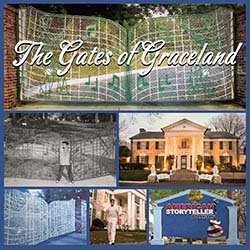
But I swear I saw Elvis at Graceland’s pearly gates
Now I livestream sermons from my own Jungle Room
Preachin’ his gospel in a powder-blue jumper costume
[Chorus:]
Yeah I’m singin’ in my “Blue Suede Shoes”
From “Heartbreak Hotel” to the rockabilly blues
I couldn’t make it in Nashville…
…but honey, I sure ain’t through
‘Cause Memphis gave me somethin’ sacred
…somethin’ strange, but somethin’ true
So every Friday I’m channeling’ “Moody Blue”
…right here in the City of Memphis
…right here in Elvis’s shoes
[Instrumental Outro:]
So if you see me on Union, or down on South Main
Don’t mind the glitter or the gold-lamé with a stain
I’m not crazy : I’m just payin’ my dues
Walkin’ proud in Memphis…
Walkin’ proud in Elvis’s shoes.
“In Elvis's Shoes” plays like a Southern gothic fever-dream set to a fast, bright pulse:145 BPM in C Major:where the music’s outward sheen (major key, rockabilly velocity) keeps trying to outrun a story that’s quietly unraveling. It is, at once, a redemption narrative, a satire of celebrity worship, and a psychologically intimate portrait of a performer who replaces one broken industry dream with another, more mythic one. The song’s greatest nuance is that it never forces you to choose a single interpretation: the protagonist is both pilgrim and impersonator, both hustler and believer, both self-aware and slipping.
The intro establishes “Nashville” not as a glamour capital but as an exhaustion point:a place where ambition has turned into self-interrogation. The lines are short, clipped, and conversational, as if the singer is narrating while still bruised: “My dreams and my money ran dry / My voice was once full of fire… now it’s just askin’ why.” That “why oh why” is important: it’s melodramatic on the surface, but it also signals the protagonist’s artistic identity has become a question rather than a statement. The bus ride down Highway 51 reads like a ritual departure. Nashville is the modern machine of aspiration; Memphis is framed as the older altar, a place where myth might still grant meaning. “Down south to chase the ‘One’” is especially telling:“the One” being Elvis, but also the elusive “one shot,” “one break,” “one true stage.” The song’s engine is that conflation: spiritual salvation and career salvation become the same hunger.
Verse 1 is where Memphis becomes musical and tactile. “Rhythm in the cracks” suggests the city’s sound is embedded in its wear:music as something born from imperfect surfaces, not polished studios. The narrator “swears” he hears the King “whisperin’” by the tracks, which reads like inspiration at first, but also foreshadows the song’s later blur between revelation and delusion. The neon over the Orpheum “knew what I was really lookin’ for”:a clever personification that turns the city into a conspirator. And then comes the moral pivot: standing at the statue, seeing “the light,” the singer says, “I didn’t care if it was wrong… I didn’t care if it was right.” That line is the song’s ethical warning label. He isn’t just chasing music; he’s surrendering discernment. In one stroke, the narrative announces how idolatry begins: not with malice, but with permission.
The chorus is built as a manifesto, and it’s deceptively buoyant. The Elvis song titles (“Blue Suede Shoes,” “Heartbreak Hotel,” “Moody Blue”) function like liturgy:canonical phrases the singer repeats until they become identity. The most pointed line is, “No, I couldn’t make it in Nashville… but honey, I sure ain’t through.” It’s defiance, yes, but also displacement: Nashville rejected him, so he seeks legitimacy through a different gatekeeper:Elvis’s myth. The chorus’s key emotional trick is in its triad: “somethin’ sacred / somethin’ strange / but somethin’ true.” That’s a diagnostic sentence. “Sacred” is devotion. “Strange” is the creeping awareness that this devotion may be unhealthy. “True” is what keeps him from admitting it. The chorus doesn’t resolve the tension; it celebrates it.
Verse 2 turns Sun Studio into a church, and the Colonel into a priest with a sales contract. “Sun Studio called out to me like a sacred hymn” is classic pilgrimage language, but the next line:“I heard the Colonel say, ‘Come right on in’”:introduces a figure whose historical role complicates the holiness. The Colonel is both impresario and manipulator in the cultural imagination, and here he’s the voice granting access. The imagery of “glittering gold records” is intentionally seductive:fame as ornamentation:and the catalog sweep from “All Shook Up” to “Your Cheatin’ Heart” underscores how the protagonist is stepping into an established archive rather than forging his own. The title phrase lands with an eerie smoothness: “Then I stood before In Elvis's Shoes / Where Elvis nodded and smiled… I know he wanted me to play the part.” “Play the part” is doing double duty: it can mean “perform,” but it also means “act,” “pretend,” “be cast.” The narrator isn’t just inspired by Elvis; he’s being recruited into a role, which quietly drains his autonomy.
Verse 3 is the song’s most cinematic sequence and also its sharpest satire. The Arcade Diner is rendered with affection:the waitress calling him “Son” gives him the familial warmth Nashville withheld. But then the Colonel becomes a recurring apparition, waiting “in the last booth,” turning an everyday Memphis landmark into a backroom audition. The Colonel’s “fried-banana plan” is absurdist and iconic at the same time:comic detail that reveals how myth is built from trivia. When the Colonel whispers, “The King’s been watchin’ you,” the line is both motivating and coercive, like a religious claim wielded as sales pressure. The trip to Lansky Brothers for a “sequined suit and cape” marks the moment the transformation becomes literal costume. The closing image:“a curl and a mission / without a plan for my escape”:is the lyric’s most quietly tragic admission. He’s crossed into a persona that doesn’t come with an exit strategy.
Verse 4 completes the arc from pilgrimage to performance to dissociation. The “milkcrates as my throne” is brilliant because it’s simultaneously pathetic and regal:street busking with royal delusions. “Selfies with drunks and tourists” and the “broken rhinestone microphone” place him in the commerce of modern attention, where even decline can be content. The line about “traffic cones like old bandmates” is the song’s first overt signal that we may be watching a mind fracture:yet it’s written with a wink, keeping the tone unstable. Then comes the spiritual escalation: “I swear I saw Elvis at Graceland’s pearly gates.” The phrasing is explicitly religious, swapping Graceland for heaven, Elvis for a saint. The “livestream sermons” from the “Jungle Room” is a darkly contemporary twist: the internet becomes the new church, and impersonation becomes evangelism. He isn’t only singing Elvis; he’s preaching him. That’s the lyric’s final, unnerving turn: fandom transforms into theology.
The final chorus repeats as if repetition itself is the hook:and that’s the point. The song mirrors obsession’s structure: the same words, the same titles, the same vow, tightened like a loop. By the time we reach the instrumental outro, the narrator anticipates judgment: “Don’t mind the glitter… with a stain.” That stain is literal grime and metaphorical blemish:proof the fantasy is lived-in, not polished. “I’m not crazy : I’m just payin’ my dues” is the closing thesis, and it lands with ambiguity. It can be read as gritty resilience: a performer doing what it takes. It can also be read as denial: a man explaining away his collapse as “commitment.” The last line, “Walkin’ proud in Elvis’s shoes,” is triumph and tragedy in one sentence. Pride, because he’s found a stage. Tragedy, because the shoes aren’t his.
What makes “In Elvis's Shoes” work is its tonal duality. In C Major at 145 BPM, it has the sonic posture of swagger:bright, propulsive, almost celebratory. But the lyric keeps slipping in shadows: statues that “show the light,” gates that imply afterlife, a Colonel who appears like a specter, and a protagonist who becomes both performer and prophet. It’s a story about what happens when artistic hunger meets an American myth powerful enough to feel like grace. And it leaves you with a discomforting question: is he being saved by music, or swallowed by it?





.jpg)