"Leave Your Bedroom Light On©"
Release Date: January 12th, 2026
Lyrics by M. S. McKenzie (Unless Otherwise Noted) | Music Performed by Songs Across America or American Storyteller Music, All Songs Are Protected by ©
~ Associated State Links ~
"Leave Your Bedroom Light On"
I wrote "Leave Your Bedroom Light On" for the person left behind in the Smokies while someone they love chases Music Row's brighter stage. Morning breaks on the Smokies blue, mist on the ridgeline, me missing you, I'm still here where the foothills breathe, and I wanted the narrator's steadiness to be the whole emotional center, someone choosing to stay rooted while asking the person leaving not to close the door on what they could still become together.
The story behind the song is the honesty in the second verse, where he admits I'm no hero, I know my flaws, I hold too tight when I'm scared to lose. I did not want this to be a simple, uncomplicated plea. Real fear of losing someone can make a person cling too hard, and I wanted that self-awareness sitting right alongside the plea itself, because I think it makes the request more honest rather than less.
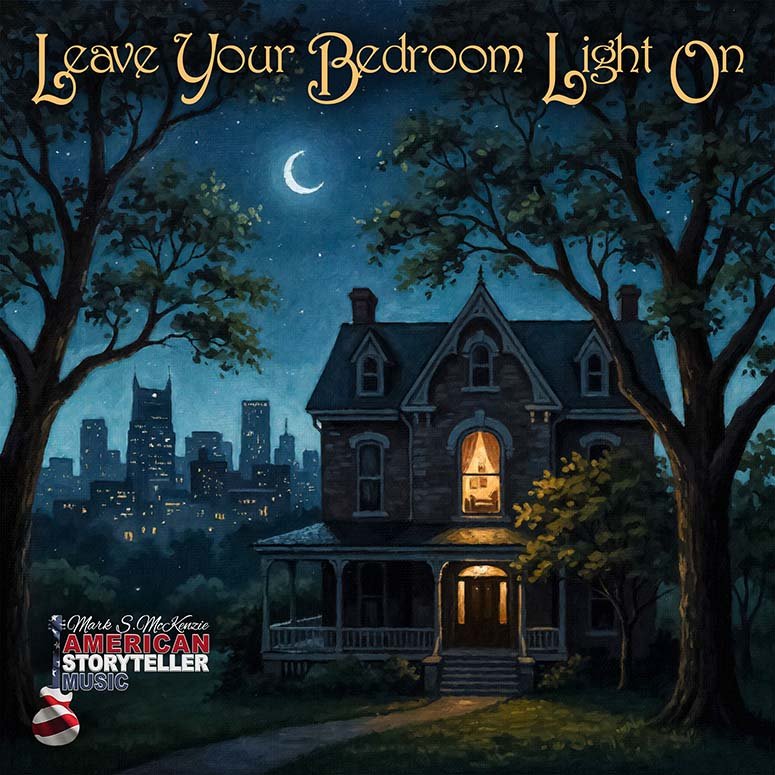
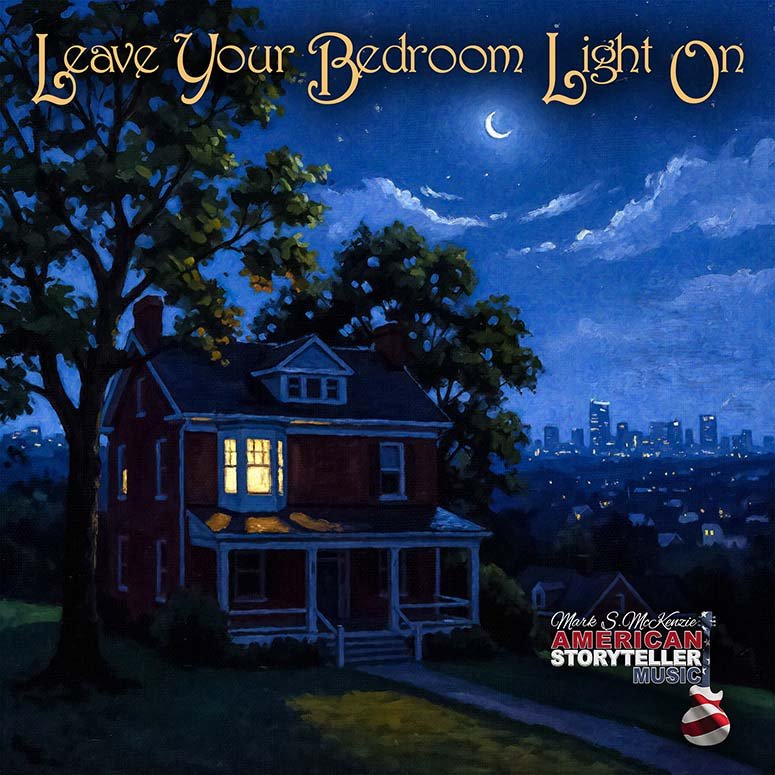
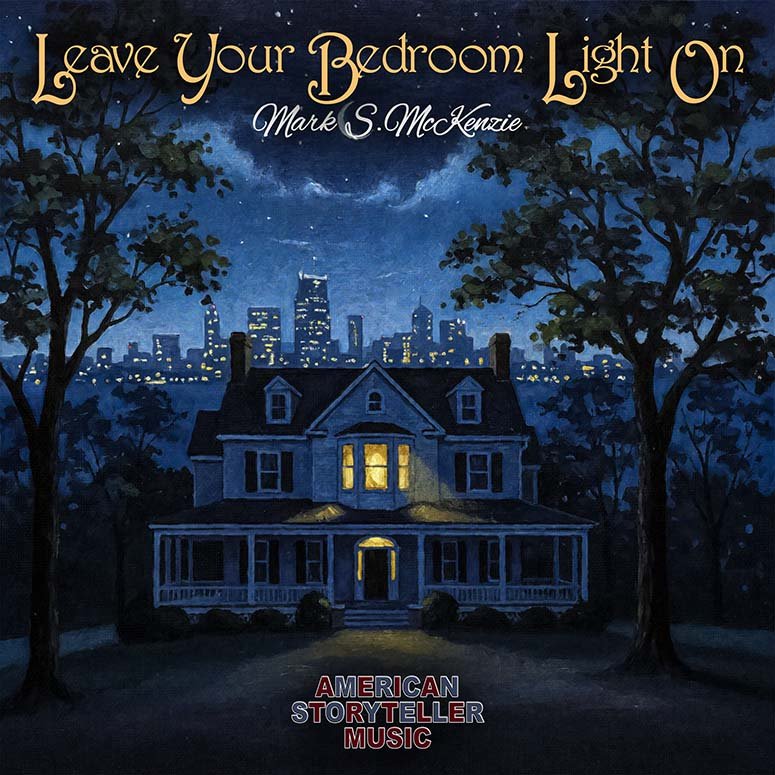
What I care about most is the chorus's specific image, leave your bedroom light on for me, don't shut the door on what we could be, because I wanted the request to be small and physical rather than grand. He's not asking her to give up Nashville. He's asking for one light left on, a door left open, proof that distance doesn't have to mean an ending. Songs Across America has plenty of songs about chasing a dream. This one is for the person holding the porch light steady back home while somebody else does the chasing.
Tender country ballad built on a gentle, pleading chorus, moving from quiet rootedness through honest vulnerability into a hopeful, open-ended close.
Long-distance love and staying rooted while a partner chases ambition, honest self-awareness about fear and clinging, small physical gestures as proof of enduring love, and East Tennessee as a steady anchor.
Primary Subject:
A person remaining in the Smoky Mountain foothills while their partner pursues a music career in Nashville, and the quiet plea to keep the relationship open across the distance.
Mood:
Tender, vulnerable, and quietly hopeful throughout.
Loving someone who's chasing a dream far from home doesn't require asking them to give it up. Sometimes love is just leaving a light on, keeping the door open, and trusting that distance doesn't have to mean the end of what you're building together.
[Intro: Instrumental]
[Verse 1]
Morning breaks on the Smokies blue
Mist on the ridgeline, me missing you
I’m still here where the foothills breathe
By old backroads and dogwood trees
You’re packing dreams in a cardboard case
Chasing Music Row and a brighter stage
[Pre-Chorus]
I know that distance makes doubts feel loud
And goodbye talk comes easy now
But listen close, before you go
[Chorus]
Leave your bedroom light on for me
Don’t shut the door on what we could be
This love ain’t built for one last night
It’s miles and years and Friday lights
From Knoxville down to Nashville town
Let the miles run long, don’t let your lovin’ run out
If your heart is tired, lean it on mine
Ohhhh, Leave your bedroom light on…
[Verse 2]
You say the road will change your name
New faces calling, even a new kind of flame
Neon glitter on Broadway signs
Late-night hope and borrowed time
And I’m no hero, I know my flaws
I hold too tight when I’m scared to lose
[Pre-Chorus]
If you’re looking for a reason to end
I’ve got a hundred I could defend
But love’s not perfect, it’s true
[Chorus]
Leave your bedroom light on for me
Don’t shut the door on what we could be
This love ain’t built for one last night
It’s steady hands and staying right
From Johnson City to Nashville town
Let the miles run long, don’t let your lovin’ run out
If your heart is tired, lean it on mine
Oooo, Leave your bedroom light on…
[Instrumental Break: Electric piano lead. Soft guitar fills. Strings swell, then settle]
[Verse 3]
I lost my temper, said words too sharp
Pride like a match in a paper heart
You had every right to turn away
To trade our promise for your escape
But there’s still a song in this worn-out room
And it’s got your name in every tune
[Bridge]
If the night gets heavy in that city glow
And the silence hits when the show is over
Step outside, breathe in, and you’ll find
The same Tennessee sky we shared
I’ll be right here, I swear
[Chorus]
Leave your bedroom light on for me
Don’t shut the door on what we could be
This love ain’t built for one last night
It’s faith that holds when it don’t feel right
From the Smoky Mountains to Nashville town
Let the miles run long, don’t let your lovin’ run out
If your heart is tired, lean it on mine
Oh, Leave your bedroom light on
[Outro]
I can’t follow where your dreams have to go
But I can love you steady from back home
So when you’re lonely and the wind turns cold
Leave your bedroom light on…
Oh, oh, ohhh, yeah…
leave your bedroom light onnnn…
[Instrumental Outro:]
“Leave Your Bedroom Light On” is written with the emotional discipline of a classic road-distance ballad: understated in its language, precise in its imagery, and quietly devastating in what it refuses to sensationalize. The lyric never begs in a melodramatic way; it negotiates. It offers a vow without trying to cage the other person’s ambition. That tension:love that wants to hold on, set against a dream that has to move:is the song’s core drama, and the “bedroom light” becomes a remarkably effective symbol: not surveillance, not control, but a small, human signal that says, “I’m still here if you’re still us.”
The intro’s staging (“warm electric piano,” “soft strings,” “brushed snare”) is not incidental. It frames the story in soft edges and late-night intimacy rather than big arena catharsis. That sonic palette matches the lyrical posture: this narrator doesn’t posture as a hero; he sounds like someone who knows the cost of saying the wrong thing at the wrong time and is trying, carefully, to say the right thing now.
Verse 1 opens in the Smokies with a kind of quiet, pastoral fidelity:“Morning breaks on the Smokies blue / Mist on the ridgeline”:and immediately turns that landscape into emotional weather. The mountains are not just scenery; they are permanence, continuity, the life the narrator is staying inside while the other person is leaving. The line “me missing you” is almost plainspoken to the point of vulnerability, and that simplicity works because the verse is otherwise rich with place: “foothills,” “old backroads,” “dogwood trees.” It’s a life rooted in slow details. Against that rootedness, the departing lover is “packing dreams in a cardboard case,” a great choice of image because it deglamorizes ambition. It’s not a shiny suitcase; it’s a box:temporary, scuffed, practical. Nashville is “a brighter stage,” and the lyric doesn’t mock that. It acknowledges the seduction without denying the ache.
The pre-chorus is where the song’s psychological insight sharpens. “Distance makes doubts feel loud” is one of the strongest lines in the piece because it captures how separation amplifies small insecurities into certainties. “Goodbye talk comes easy now” is even more cutting: it suggests that leaving has become a conversational habit:something rehearsed, repeated, normalized. And then: “But listen close, before you go.” It’s not an ultimatum. It’s a last attempt at clarity.
The chorus is built around restraint. “Leave your bedroom light on for me” is not “wait for me” or “don’t go.” It’s a request for a tiny, sustaining openness. The metaphor is domestic, intimate, almost childlike in its simplicity, and that’s why it lands: a light left on is a promise without a contract. “Don’t shut the door on what we could be” extends the symbol without overexplaining it. Then the chorus declares what kind of love this is: “This love ain’t built for one last night / It’s miles and years and Friday lights.” That “Friday lights” line is a subtle, culturally loaded detail:small-town continuity, routine, local rituals that endure while big-city glamour comes and goes. The map (“From Knoxville down to Nashville town”) functions as both geography and emotional distance, and the rhyme of “run long / run out” turns mileage into metaphor: you can travel far, but don’t let affection deplete.
Verse 2 complicates the narrative in an important way: it grants the departing lover a real argument. “The road will change your name” is not just about a stage name; it’s about identity, reinvention, the fear that fame:or even proximity to it:will make you unrecognizable to the people who loved you first. “New faces… a new kind of flame” implies temptation without turning it into villainy. The phrase “borrowed time” under Broadway neon reads like the narrator understands the hustle: gigs, late nights, transient relationships, the way desire and opportunity blur when you’re exhausted and being seen. Then comes the self-indictment: “I’m no hero, I know my flaws / I hold too tight when I’m scared to lose.” That is the lyric refusing the easy moral binary. The narrator isn’t saying, “Don’t leave because I’m perfect.” He’s saying, “I know I’ve contributed to the pressure.” It’s a mature admission, and it makes the plea credible.
The second pre-chorus is quietly brutal in its logic: “If you’re looking for a reason to end / I’ve got a hundred I could defend.” The narrator can list excuses and counterarguments; he can debate. But then he concedes the deeper truth: “But love’s not perfect, it’s true.” That line is not an excuse for bad behavior; it’s a recognition that staying together is rarely about winning an argument. It’s about choosing one another even when the evidence isn’t tidy.
The chorus repetition shifts slightly:“steady hands and staying right”:tightening the theme from romance to reliability. Not passion, not fireworks, but steadiness. Also notable is the change from Knoxville to Johnson City in the route. It suggests a broader, more personal map of Tennessee:this isn’t a generic “small town to big city” trope; it’s a lived-in region with specific points of origin.
The instrumental break is placed exactly where it should be: after the lyric has admitted the narrator’s flaws but before it reveals the pivotal wound. It functions like a breath:time for the listener to sit with the confession before the story turns to the moment that caused the fracture.
Verse 3 is the lyric’s emotional apex because it stops implying and names the damage. “I lost my temper, said words too sharp / Pride like a match in a paper heart” is an excellent metaphor: pride as ignition, the relationship as something flammable and fragile when handled carelessly. The line “You had every right to turn away” is a rare kind of accountability in this genre:it doesn’t minimize the partner’s reasons for leaving. The phrase “trade our promise for your escape” is telling: “escape” suggests the relationship may have felt confining. Yet the verse ends not with denial but with music as the remaining tether: “There’s still a song in this worn-out room / And it’s got your name in every tune.” The “worn-out room” echoes the bedroom-light motif, turning that private space into a creative and emotional container. The narrator’s art is not separate from love; it’s saturated with it.
The bridge is the song’s most strategically compassionate section. It doesn’t ask the partner to abandon the dream; it gives them a coping ritual for the loneliness that follows performance. “When the show is over” is key:this lyric understands that the hardest part of chasing music isn’t the stage; it’s the silence afterward. “Step outside… you’ll find the same Tennessee sky we shared” is a beautiful geographical consolation: different city, same sky. It’s a way of saying distance is real, but not absolute; there are still shared constants. “I’ll be right here, I swear” is simple, but after the admissions of anger and pride, it reads as a promise to be stable, not a promise to be possessive.
The final chorus lands with the strongest variation: “It’s faith that holds when it don’t feel right.” That is a mature definition of long-term love:commitment as something that persists through discomfort, not just through romance. The map expands (“From the Smoky Mountains to Nashville town”), and the imagery widens from specific towns to the whole emotional landscape.
The outro is where the lyric achieves its most honest balance. “I can’t follow where your dreams have to go” is the line that saves the song from becoming controlling. It acknowledges that some callings require physical separation. But it immediately follows with, “I can love you steady from back home.” That phrase:“love you steady”:is the song’s ethical center. The request to “leave your bedroom light on” becomes less about ownership and more about connection: a small beacon against the cold moments of doubt, isolation, and post-show emptiness.
In the end, “Leave Your Bedroom Light On” succeeds because it treats ambition with respect and love with accountability. It avoids the two lazy routes this kind of story can take: either demonizing the dream or idealizing the one who stays behind. Instead, it shows a narrator learning how to ask for a future without demanding it:a plea made in soft light, not spotlight glare. The bedroom light is not a chain. It’s an invitation: a quiet, persistent yes, left burning in case the distance makes the doubts feel loud.














.jpg)