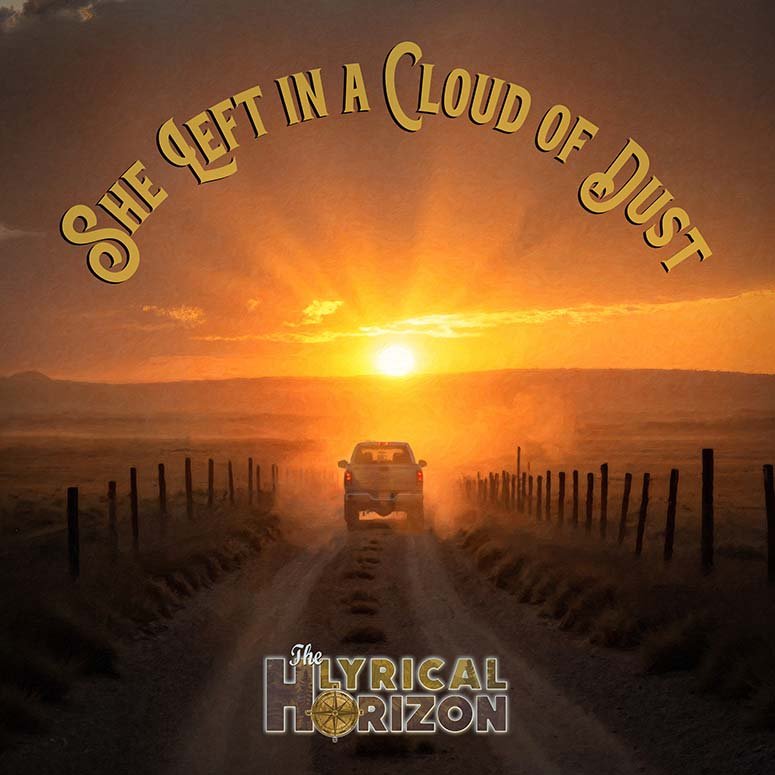
"She Left in a Cloud of Dust©"
Release Date: August 9th, 2025
Lyrics by M. S. McKenzie (Unless Otherwise Noted) | Music Performed by Songs Across America or American Storyteller Music, All Songs Are Protected by ©
~ Associated State Links ~
I wrote "She Left in a Cloud of Dust" for the specific silence of waking up in Texas Hill Country to find the person you built a whole life with already gone. In the shadow of Enchanted Rock, out where the Pedernales flows, we built our dreams on this dusty land, and I wanted that land, once shared, to become the loneliest possible place once she's ridden out of it.
The story behind the song is how literally I let the landscape absorb the heartbreak, cattle roaming where we once laughed, endless skies standing in for all the empty space she left behind. I did not want this to be a song about anger. You took the love that built this place, and left me with all this empty space is grief rather than blame, and I wanted every image after that, the wind, the crows, the lost hoofbeats, to carry that same quiet devastation rather than resentment.
What I care about most is the honesty in trying not to cry, in the doorway, watching her ride away, because I wanted the narrator's pride and his heartbreak to be visibly fighting each other in that one moment. Songs Across America has plenty of songs about Texas pride and open land. This one is about how that same wide-open beauty can turn into the loneliest possible landscape once the person you shared it with is gone.
Classic country heartbreak ballad built on a mournful, steady chorus, opening on soft guitar evoking the vastness of the Texas landscape.
Heartbreak set against Texas Hill Country, land as a witness to both love and loss, grief without blame, and pride quietly breaking under real sorrow.
Primary Subject:
A man in Texas Hill Country grieving the sudden departure of the partner he built a life with, near Enchanted Rock and the Pedernales River.
Mood:
Devastated, mournful, and quietly aching throughout.
The same landscape that once held a shared love can become the loneliest possible place once that person is gone, and grieving that loss honestly means letting the land itself carry the weight of the absence.
Original Song Lyrics: Written by M. S. McKenzie, All Rights Reserved
[Intro:]
[Verse 1:]
In the shadow of Enchanted Rock,
Out where the Pedernales flows...
We built our dreams on this dusty land
With a love that only we could know...
But today before the sun rose into a Texas sky
You had packed your bags without a sound
I stood in the doorway, trying not to cry
As I watched you ride away...
...My heart unwound
[Chorus:]
Oh, you left me in a cloud of dust
With memories that haunt my nights
The cattle roam where we once laughed
Now it’s just me and these endless skies
You took the love that built this place
And left me with all this empty space
In the heart of Texas, I try to stand tall
But without you, I know I’ve lost it all
[Verse 2:]
We used to dance beneath the stars,
Under the moonlight I would hold you tight
You were part of me, but now there's only scars
Left to wander the range in endless night
The wind howls and the crows mock me
Riding these trails all alone is a losing fight
Each hoofbeat echoes lost memories
Of a love that felt so right
[Chorus:]
Oh, you left me in a cloud of dust
With memories that haunt my nights
The cattle roam where we once laughed
Now it’s just me and these endless skies
You took the love that built this place
And left me with all this empty space
In the heart of Texas, I try to stand tall
But without you, I know I’ve lost it all
[Verse 3:]
Now the sunsets paint an unfamiliar hue
Since the colors seem faded some how
I search the horizon for any sign of you
But all I see in the clouds of dust are cows
The ranch is too quiet and the fields are bare
I can still hear your laughter over the wind
But I’ll keep on riding through my despair
Hoping one day you’ll come back again...
[Chorus:]
Oh, you left me in a cloud of dust
With memories that haunt my nights
The cattle roam where we once laughed
Now it’s just me and these endless skies
You took the love that built this place
And left me with all this empty space
In the heart of Texas, I try to stand tall
But without you, I know I’ve lost it all
[Chorus:]
Oh, you left me in a cloud of dust
With memories that haunt my nights
The cattle roam where we once laughed
Now it’s just me and these endless skies
You took the love that built this place
And left me with all this empty space
In the heart of Texas, I try to stand tall
But without you, I know I’ve lost it all
[Outro: Instrumental]
“She Left in a Cloud of Dust” is a classic Texas breakup ballad built on one of the genre’s most enduring devices: landscape as emotional weather. The lyric treats Central Texas not as scenery, but as a witness:Enchanted Rock, the Pedernales, open range, wind and crows:each element reinforcing a single truth the narrator can’t outride: what used to feel vast and freeing now feels vast and empty. The story is simple by design, but the nuance lies in how the song turns ordinary ranch images into a kind of private mythology, where love wasn’t merely lived on the land:it was what made the land feel like home.
The intro’s “soft guitar melody” cues the song’s ethos immediately: intimate, unflashy, built for solitude. It’s not the sound of a showdown; it’s the sound of a long look across a horizon that no longer offers relief. That tonal choice aligns with the narrator’s posture throughout: grieving without theatrics, holding himself together because there’s work to do, even when the heart is coming apart.
Verse 1 opens with strong geographic anchoring:“In the shadow of Enchanted Rock / Out where the Pedernales flows”:which does more than place the listener. It conveys permanence. Those landmarks predate the relationship and will outlast it, and that contrast adds weight to the departure: her leaving isn’t just a personal betrayal; it feels like an affront to the stability of the world itself. The line “We built our dreams on this dusty land” frames the relationship as an act of construction:something made through effort, patience, and shared labor. That’s why the next detail hits hard: “today before the sun rose… you had packed your bags without a sound.” The silence is the cruelty. There’s no argument, no closure, no scene. Just absence, and the narrator left in the doorway, a threshold image that matters:caught between inside and outside, past and future, wanting to stop her and knowing it’s already done. “My heart unwound” is a particularly apt phrase: it suggests not a sudden snap, but a slow unraveling of something once tightly held.
The chorus expands the metaphor into its central image: dust as both literal and psychological. “You left me in a cloud of dust” evokes the physicality of a vehicle or horse riding off the ranch road, but it also captures the way abandonment disorients. Dust obscures vision; it lingers; it gets into everything. It’s a residue of departure. The lyric’s most effective move here is to keep the ranch functioning while the relationship collapses: “The cattle roam where we once laughed.” Life continues. The animals don’t mourn. That contrast makes the narrator’s grief feel lonelier and more humiliating:he’s hurting in a world that keeps moving. The line “You took the love that built this place / And left me with all this empty space” is the song’s emotional thesis: love was the architecture. Without it, the physical structures remain, but the meaning is gone. “In the heart of Texas, I try to stand tall” introduces the cultural pressure to be stoic, to endure:Texas pride as armor. The last line, “without you, I know I’ve lost it all,” is intentionally absolute. It’s not measured; it’s the kind of statement someone makes when they are still in the first stage of grief, when loss feels total because the imagination can’t yet picture a life beyond it.
Verse 2 shifts into night imagery and deepens the sense of haunting. “We used to dance beneath the stars” is a familiar country-romance image, but it’s important that the song keeps returning to the sky. The stars and moon that once romanticized the ranch now underline isolation: the same sky, but no shared body heat beneath it. “You were part of me, but now there’s only scars” leans into the physical metaphor of injury, which the rest of the verse supports through sound and animals: “wind howls,” “crows mock me,” “each hoofbeat echoes.” Those details personify the environment as antagonistic:not violent, but cruelly indifferent. Crows “mock” because loneliness can make ordinary noises feel like judgment. The hoofbeats echo “lost memories,” implying that even his attempts to keep working:riding the trails, doing ranch life:are contaminated by flashbacks. The lyric captures a rural form of grief: you cannot stop moving, because chores and animals still demand care, but every movement triggers remembrance.
Verse 3 is where the song’s melancholy becomes more existential. “Sunsets paint an unfamiliar hue / Since the colors seem faded somehow” is not literally true, of course, and the lyric doesn’t need it to be. It’s grief’s perceptual distortion: the world looks wrong because the internal lens has changed. The narrator searches “the horizon for any sign of you,” which is both romantic and tragic because the horizon is infinite:it’s a place you can always project hope without ever being forced to find proof. The line “all I see in the clouds of dust are cows” is quietly devastating. It’s almost darkly comic: he wants a sign, a miracle, a silhouette returning, and reality gives him livestock. That bluntness is the song momentarily letting the truth speak: the land will not deliver her back.
“The ranch is too quiet and the fields are bare” continues the emptiness motif, but the more interesting nuance is the auditory hallucination of love: “I can still hear your laughter over the wind.” This suggests she has become a ghost in the everyday soundscape. Yet the verse refuses full surrender. “I’ll keep on riding through my despair / Hoping one day you’ll come back again” is not empowerment; it’s endurance. The hope here is fragile and possibly unrealistic, but it is psychologically honest: after a silent departure, hope is often the only remaining conversation the abandoned person can have.
The repeated choruses reinforce the song’s looped grief. Rather than progressing toward closure, the lyric circles the same images:dust, cattle, sky, empty space:because that’s what heartbreak often does: it repeats itself, over and over, until time finally shifts the meaning. In that sense, the repetition is not merely structural; it is thematic. The narrator is stuck in the same day, watching the same departure, replaying it against the same horizon.
The outro’s “gentle guitar solo reflecting longing and hope” is an appropriate final gesture because the lyric never truly resolves. It ends in the space between despair and persistence:between the knowledge that she left and the stubborn refusal to stop looking for her in the dust. The song’s power comes from how it makes abandonment feel geographically specific. Enchanted Rock and the Pedernales are not decorative; they are the bedrock and river of a life that continues, even after love rides away. And in that continuing:cattle roaming, wind blowing, sunsets falling:the lyric captures the quiet cruelty of rural heartbreak: the world is wide enough to swallow your grief, but not wide enough to take it away.












.jpg)