"I Miss My Ex's Dad©"
Lyrics by M. S. McKenzie (Unless Otherwise Noted) | Music Performed by Songs Across America or American Storyteller Music, All Songs Are Protected by ©
~ Associated State Links ~
"I Miss My Ex's Dad"
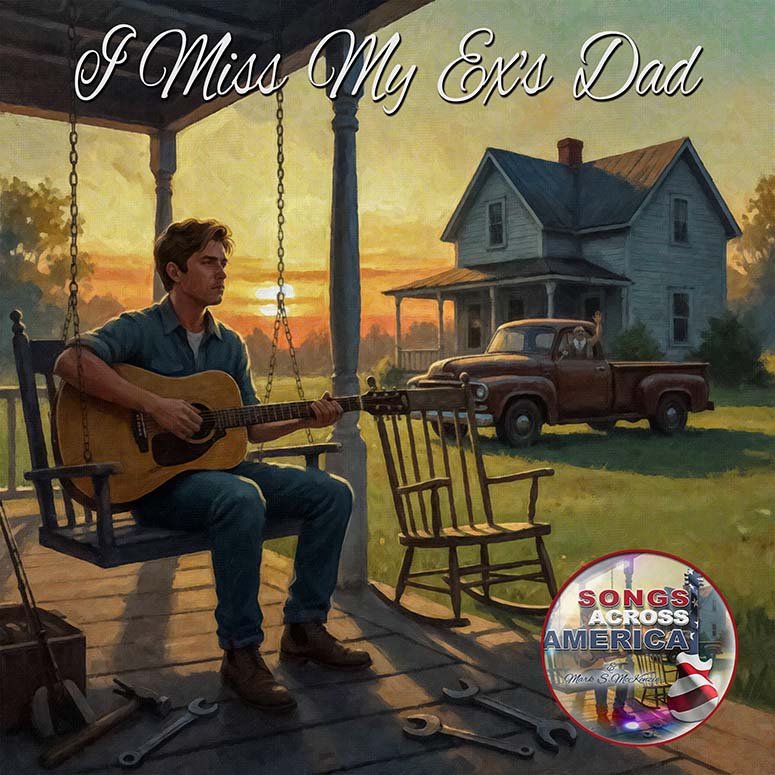
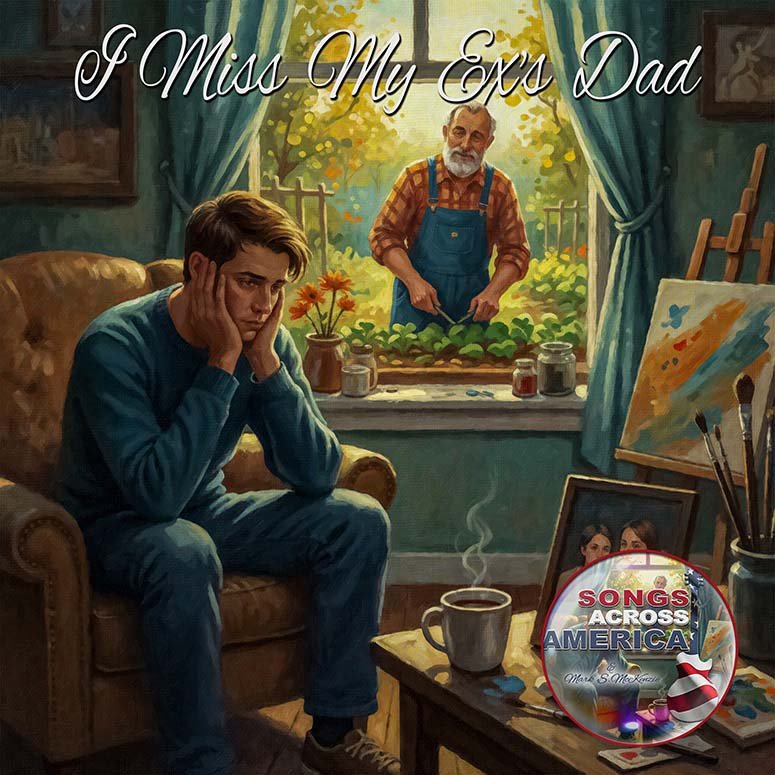
I wrote "I Miss My Ex's Dad" because breakup songs almost never admit the funniest, truest part of some breakups, that you're not actually mourning the relationship, you're mourning the in-laws. This narrator lost a girlfriend and, if he's being honest, he's coping just fine. What he can't get over is her dad, the grill, the apron, the truck talk, the guy who called him "champ" without a hint of irony. I wanted the whole joke of the song to live in how real and disproportionate that grief actually is.
The story behind the song is how specific I made the dad's charm, brisket on date three, a spare beer handed over like a peace offering, a garage full of tools the narrator was clearly more excited about than the actual relationship. I miss my ex's dad more than I miss my ex is the confession the whole song hangs on, and I wanted it delivered with total sincerity rather than as a throwaway line, because the joke only works if the narrator genuinely means it.
What I care about most is that underneath the comedy, there's something true about how relationships come with whole families attached, and sometimes we grieve the wrong person entirely when things end. Songs Across America mostly takes its subjects seriously. This one is the exception, a genuinely funny song about a genuinely real feeling, and I hope it makes people laugh at the version of themselves that's missed somebody's parent way more than they missed the actual somebody.
Playful, up-tempo country-pop built on a comedic, singalong chorus, structured as a tongue-in-cheek confession with an exaggerated, deadpan delivery.
Comedic heartbreak and misplaced grief, found family through an ex's parent, the absurdity of real emotional attachments, and humor as a way of telling an honest truth.
Primary Subject:
A young man in Austin who, after a breakup, realizes he misses his ex-girlfriend's father far more than he misses her.
Mood:
Playful, comedic, and warmly self-aware throughout.
Relationships come with whole families attached, and sometimes the person we miss most after a breakup isn't who we expected, which is exactly the kind of honest, slightly absurd feeling worth laughing about rather than hiding.
[Intro]
Yeah, we broke up last month, and that’s not so bad
But the worst part isn’t losing her…
…it’s losing my weekend hang...
...her awesome dad!
[Verse 1]
I met her up in Austin at the new coffee place in town
She was hot, for sure, but her old man really wore the crown
Showed up on date three: grill...
....apron
....AND my favorite beer!
He said, “Son, do ya like brisket?” I thought, oh man, I love it here!
We talked trucks and Texas politics; even fixing up the roof...
He liked my taste in music and my knock-off cowboy boots
She just rolled her eyes and said, “You two are somethin’ else!”
While I was in the garage with him, drooling over his new tool belt
[Chorus]
I miss my ex’s dad more than I miss my ex
He’s the one I text when life is a mess
I lost a girlfriend, sure, that’s kinda bad
But the real heartbreak’s losing her dad
He’s the only man who ever called me “champ” UN...ironically (ironically)
Now I’m scrolling through old photos like a walking irony (walking irony)
Yeah, she broke my heart, I kinda see…
But losing her dad?
...Now that’s the REAL tragedy!
[Verse 2]
I’d make up excuses just to swing by her parents' place
“Uh, her Wi-Fi’s faster, I’ll bring homework… just in case”
Truth is, I just wanted one more Sunday afternoon
On that busted leather sofa watching HIS team lose
We built a fire pit, laid pavers in the backyard
He let me borrow tools, and said, “Break one and you’re barred!”
We’d stand there, beers in hand, while the steaks would sear
He’d say, “Don’t worry ’bout my daughter, son, you’re safe in here”
[Chorus]
I miss my ex’s dad more than I miss my ex
He’s the one I text when life is a mess
I lost a girlfriend, sure, that’s kinda bad
But the real heartbreaks' losin' her dad
He’s the only man who ever called me “champ” UN...ironically
Now I’m scrolling through old photos like a walking irony
Yeah, she broke my heart, I kinda see…
But losing her dad? That’s the real tragedy
[Bridge]
Now I’m outside Home Depot walking every single aisle
Hoping I might see him, just to talk for a while
I bought a random drill bit set I’ll never even use
Just chasing that approval in his worn-out work boots
I almost called him last night around ten
Forgot for a moment that I’m not “family” again
Had my thumb on “Dad #2” right there on my phone
Then I realized I gotta grieve this bromance on my own
[Breakdown / Half-Chorus]
So if you’re a girl and you bring me home, beware
If your dad knows how to grill and actually cares
I might fall in love… with the man in that old recliner
Who’s handing out life lessons...
...and lending me his sanderrrrrr
[Final Chorus]
Yeah, I miss my ex’s dad more than I miss my ex
He’s the one who gave my screwed-up life some context
Yeah, I lost a lover, sure, that is kinda sad...
But then I ost my mentor, coach, and part-time dad
He’s the only one who’d slap me on the back and say...
....“You’ll do just fine, kid”
Now I’m practicing a secret handshake like some damn idiot!
Yeah, she moved on now, and that’s probably for the best
So I’m stuck in Waco writin' breakup songs [drag out]…
…for my ex-girlfriend’s dad
...named West
[Outro]
So here’s to you, sir, with your flip-phone and sad comb-over…
If you ever need a son again… call me, and I’ll come on over
[Instrumental Outro: extended honky-tonk piano]
This lyric is a breakup song that commits the ultimate country-comedy heresy: it treats the girlfriend as the plot device and the dad as the love story. “I Miss My Ex’s Dad” (the implied title energy is unmistakable) is built like a honky-tonk sitcom episode with a surprisingly sincere emotional core:because under the punchlines is a real grief: the loss of male mentorship, routine, and belonging. The narrator isn’t just mourning a relationship; he’s mourning entry into a household where he felt seen, useful, and uncomplicatedly accepted.
The intro sets the tone with a clean comedic misdirection. “We broke up last month, and that’s not so bad” makes you expect a typical post-breakup shrug, but the pivot:“the worst part isn’t losing her… it’s losing my weekend hang… her awesome dad!”:reveals the song’s central twist: romantic loss is secondary to the collapse of a “bromance” that had become the narrator’s emotional anchor. The spacing and staggered phrasing are important here; they mimic the timing of stand-up delivery, letting the reveal land like a punchline. But it’s also a confession: his deepest attachment wasn’t erotic, it was familial.
Verse 1 doubles down on that inversion by framing the girlfriend as attractive but quickly eclipsed. “She was hot, for sure, but her old man really wore the crown” is funny because it’s blunt, but it’s also psychologically revealing: the narrator is hungry for a certain kind of approval and companionship, and the dad provides it instantly. The “date three” detail is perfect:early enough that it feels like a rom-com scene, but specific enough to feel real. The dad arriving in a “grill apron AND my favorite beer” signals a kind of hyper-competent, hyper-welcoming masculinity: this is a man who communicates affection through food, tools, and practical generosity. The brisket line:“Son, do ya like brisket?”:isn’t just regional flavor; brisket becomes shorthand for Texas hospitality and for the narrator’s immediate sense that he’s stumbled into a tribe.
The verse’s best nuance is how it sketches intimacy through shared “guy” rituals: trucks, politics, fixing a roof, hanging in the garage. None of this is romantic; it’s fellowship. And the “knock-off cowboy boots” detail is a subtle class tell and a charm point: the narrator is trying, maybe a little performatively, to fit the role. The dad doesn’t judge; he approves. The girlfriend rolling her eyes:“You two are somethin’ else!”:is the classic romantic-comedy beat, but here it’s also narrative evidence that the narrator’s primary chemistry is not with her.
The chorus crystallizes the hook with the bluntness of a bar singalong: “I miss my ex’s dad more than I miss my ex.” That line works because it’s both ridiculous and immediately legible. Then it deepens: “He’s the one I text when life is a mess.” That’s the first moment the joke tilts toward something real. Texting is intimacy; it implies the dad has become the narrator’s default stabilizer. The line about being called “champ” “UN…ironically” is doing a lot of work. It’s funny because it’s over-explained, but the over-explanation reveals insecurity: he’s not used to affirmation that isn’t a joke. “Now I’m scrolling through old photos like a walking irony” lands as a modern heartbreak image:less cinematic than staring at a rain-streaked window, more accurate to how people actually grieve now. The chorus ends with a punchline that is also the thesis: losing the dad is “the REAL tragedy.” It’s comedy, but it’s also a genuine ranking of what mattered.
Verse 2 expands the world of this “secondary relationship” and shows why it hit so hard. The narrator invents reasons to visit:Wi-Fi, homework:because what he’s actually chasing is routine and belonging: “one more Sunday afternoon / On that busted leather sofa watching HIS team lose.” That “HIS” is key. He’s adopted the dad’s loyalties, which is exactly what family life looks like: shared disappointments, not just shared celebrations. The “team lose” detail is also crucial because it shows the bond isn’t built on constant reward; it’s built on showing up anyway.
The fire pit and pavers scene makes the dad–narrator relationship tactile. Building something together is an older, masculine language of care: you don’t say “I love you,” you hand someone a tool and invite them into the work. The dad’s line:“Break one and you’re barred!”:is affectionate boundary-setting, the kind that signals trust. And then the emotional dagger disguised as reassurance: “Don’t worry ’bout my daughter, son, you’re safe in here.” On the surface it’s a joke, but subtextually it confirms what the narrator already feels: the girlfriend is the unstable part; the dad is the safe place. That’s funny, but it’s also the seed of why the breakup hurts the way it does:this bond was never fully “allowed” to stand on its own.
The bridge is where the song becomes unexpectedly tender. Home Depot is chosen perfectly: it’s the modern temple of DIY masculinity, and he’s “walking every single aisle” like a pilgrim hoping for a miracle sighting. Buying “a random drill bit set I’ll never even use” is a beautifully pathetic detail:consumer behavior as grief behavior. He’s trying to purchase proximity to a person who gave him identity.
Then the lyric nails the real heartbreak mechanic: “Forgot for a moment that I’m not ‘family’ again.” That line is the emotional center of the whole song. The joke has been about missing the dad, but the pain is about being demoted:losing a role you had started to inhabit. “Dad #2” saved in the phone is both hilarious and devastating. It implies he had already mentally expanded his family structure. And “I gotta grieve this bromance on my own” is comedic phrasing with sincere truth underneath: there’s no cultural script for grieving a father-figure you lost through a romantic breakup.
The breakdown/half-chorus turns the premise into a warning label:“If you’re a girl and you bring me home, beware”:which is funny, but it also exposes the narrator’s pattern: he may be falling in love with stability more than romance. The dad “in that old recliner” handing out “life lessons” and lending a “sander” is one of the lyric’s sharpest images. The exaggerated “sanderrrrrr” drag is classic novelty-song theatrics, but the object choice is perfect: a tool that smooths rough edges, exactly what this dad has been doing to the narrator’s life.
The final chorus upgrades the dad from “weekend hang” to “mentor, coach, and part-time dad,” which clarifies why this isn’t just a gag. The narrator is admitting the girlfriend was a relationship; the dad was a framework. “Gave my screwed-up life some context” is an unusually honest line for a comedy song. It suggests the dad offered a model of adulthood:how to be steady, capable, generous:when the narrator didn’t have that elsewhere.
The lyric then leans into absurdity to keep the tone buoyant: “practicing a secret handshake like some damn idiot!” It’s funny because it’s so specific, but it’s also the behavior of someone who misses ritual. Handshakes, nicknames, grill nights:these are the small ceremonies of belonging, and the song is really about losing those.
The Waco tag is a clever closing twist: he’s “stuck in Waco writin’ breakup songs… for my ex-girlfriend’s dad… named West.” It’s a triple-comedy button: the geographic specificity, the melodramatic self-mythologizing of “stuck,” and the dad’s name “West” giving the whole thing a wink of mythic Americana. The outro:flip-phone, sad comb-over:humanizes the dad with affectionate roasting. And the final line, “If you ever need a son again… call me,” lands because it’s the one moment the narrator drops the irony entirely. Beneath every joke is that longing: to be chosen by a father figure, not temporarily, not by proxy, but for real.
As a story, the lyric succeeds because it uses humor as a delivery system for a very real emotional truth: breakups don’t just sever romance; they can sever community, mentorship, routine, and identity. The dad is not just a funny character:he represents a kind of unconditional, practical care the narrator didn’t realize he needed until it vanished. And that’s why the punchline keeps working: it’s ridiculous to miss your ex’s dad more than your ex, and it’s also, in its own way, heartbreakingly believable.











.jpg)