"The Winds of Time©"
Lyrics by M. S. McKenzie (Unless Otherwise Noted) | Music Performed by Songs Across America or American Storyteller Music, All Songs Are Protected by Copyright
~ Associated State Links ~
"The Winds of Time"
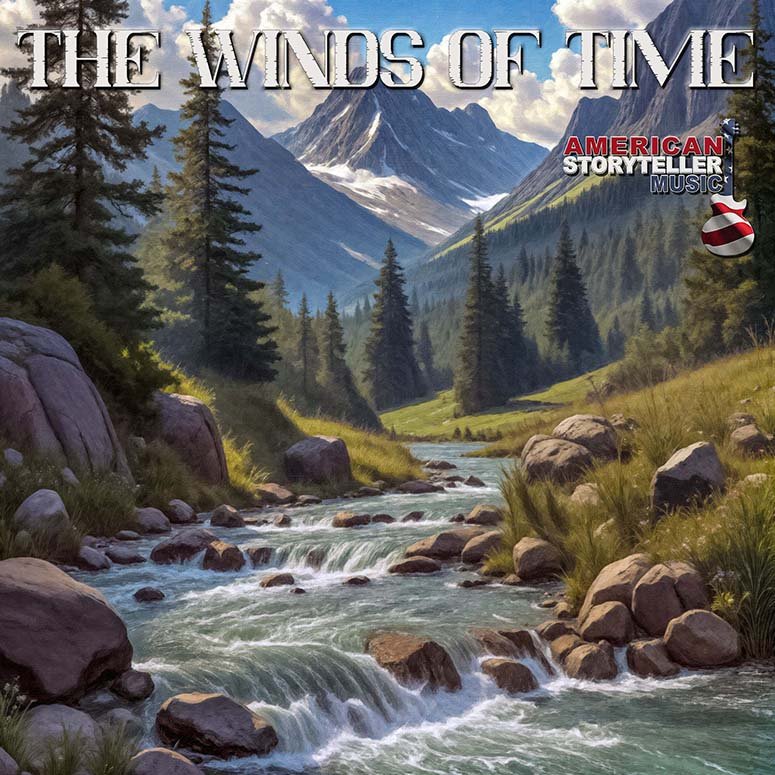
I wrote "The Winds of Time" for the Wind River Range's particular patience, granite peaks against a sapphire sky that have been standing since long before Shoshone myths marked the ancient stones surrounding them. I wanted the song to feel unhurried in the way the range itself is unhurried, glaciers carving jagged walls across spans of time no single visit could measure.
The story behind the song is how much I let the sacred and the seasonal sit together, medicine wheels marking sacred ground right alongside summer's alpine flowers, purple lupine and Indian paintbrush blooming under Gannett Peak's snowy height. I wanted the range to feel like it was holding both timeless ceremony and passing seasons in the same view, ancient and renewing at once.
What I care about most is the bridge's claim, time stands still in this wilderness, cherish what nature has given us, because I wanted the whole song to function as a kind of instruction disguised as a description. Songs Across America has plenty of songs about wild places worth visiting. This one is for the Wind River Range specifically as a place worth simply being patient inside, letting solitude and blissful peace still be found there.
Reverent, atmospheric folk-rock built on layered vocals and a hushed, expansive chorus, structured as a season-spanning meditation on the Wind River Range.
The Wind River Range's ancient patience, Shoshone sacred history embedded in the land, seasonal renewal alongside timeless stone, and stillness as the proper response to wilderness.
Primary Subject:
Wyoming's Wind River Range, from Gannett Peak and Titcomb Basin to its glacial cirques and alpine wildflower meadows.
Mood:
Reverent, patient, and quietly timeless throughout.
Some landscapes teach patience simply by existing on their own ancient timescale, holding both timeless sacred ground and passing seasonal beauty at once, and the gift they offer is the chance to be still long enough to actually receive it.
[Intro: Instrumental]
[Verse 1]
Granite peaks against a sapphire sky
Shadowed cliffs where eagles fly
Shoshone myths mark ancient stones
And valleys filled with sacred bones
Glaciers carved these jagged walls
Where mountain snows feed waterfalls
[Chorus: layered vocals]
Wind River Range so wild and free
A treasured land for all to see
Sacred rivers and ancient ways
Layered mountains in purple haze
The winds of time still whisper here
Throughout the seasons of the year
[Verse 2]
Summer brings the alpine flowers
While purple lupines frame rocky towers
Indian paintbrush with reds so bright
Under Gannett Peak's snowy height
Medicine wheels mark sacred ground
And tawny peaks are all around
[Bridge: layered vocals]
Through Titcomb Basin's crystal stream
Below the Cirque where Ancients dream
Time stands still in this wilderness
Cherish what nature has given us
Where solitude still holds its ground
And blissful peace can still be found
[Verse 3]
Winter wraps the mountains in white
And the Milky Way lights up the night
Beneath the stars the stories flow
Of native warriors from long ago
Ancient spirits whisper in the wind
Where the past and present transcend
[Verse 4]
Pale-skinned feet now mark these trails
Through Badlands that know far older tales
Long before the trappers' camps grew cold
The Shoshone walked these paths, I'm told
Long after we're gone these peaks will remain
The silent keepers of time's endless chain
[Chorus: layered vocals]
Wind River Range so wild and free
A treasured land for all to see
Sacred rivers and ancient ways
Layered mountains in purple haze
The winds of time still whisper here
Throughout the seasons of the year
[Chorus: layered vocals]
Wind River Range so wild and free
A treasured land for all to see
Sacred rivers, and ancient ways
Layered mountains in purple haze
The winds of time still whisper here
Throughout the seasons of the year
[Outro: Instrumental]
"The Winds of Time" is a reflective and conservation-minded song about the Wind River Range and the long relationship between mountains, memory, Indigenous history, and human impermanence. Although it shares several landscapes with "Wind River Rising," its emotional character is more contemplative. Rather than emphasizing the strength and upward movement of the mountains, it considers what the mountains remember and what they will outlast.
The first verse opens with granite peaks beneath a sapphire sky. Eagles move along shadowed cliffs, glaciers have carved the mountain walls, and melting snow feeds waterfalls below. The range is introduced as an interconnected system in which ancient ice, seasonal snow, rivers, and wildlife remain linked.
The reference to Shoshone myths and sacred stones establishes that the landscape contains cultural meaning. The mountains are not merely rock formations. They are places through which generations interpreted ancestry, creation, danger, survival, and belonging.
The phrase "valleys filled with sacred bones" gives the opening a solemn quality. It may suggest ancestral presence, burial, archaeological memory, or the remains of wildlife embedded within the region's natural history. In every interpretation, the line emphasizes that the mountains are repositories of life and death.
The chorus identifies the Wind River Range as "a treasured land for all to see." This turns admiration into an implicit conservation statement. The range is valuable not only to those who live nearby or travel through it but to future generations who may inherit it.
"Sacred rivers and ancient ways" brings ecology and culture together. Rivers carry water from mountain snowfields, while ancient ways represent old paths, knowledge, ceremonies, and human relationships with the land. The "layered mountains in purple haze" add a painterly distance to the scene.
The central line, "The winds of time still whisper here," defines the song's philosophy. Time is not portrayed as silent. Its passage can be sensed in eroded peaks, retreating ice, remembered stories, changing trails, and the contrast between temporary human lives and enduring mountains.
The second verse celebrates the brief color of alpine summer. Lupines and Indian paintbrush bloom beneath rocky towers and Gannett Peak. These flowers represent beauty that is intense precisely because it is temporary.
Medicine wheels again bring attention to sacred ground. Tawny peaks surround these sites, creating the sense that the entire landscape participates in their meaning. The verse does not treat cultural history as separate from the physical setting. Stone, sky, direction, and mountain horizon belong to the same experience.
The bridge carries the listener through Titcomb Basin and toward the Cirque of the Towers. Crystal water and great granite walls create the impression of a protected inner world. The statement that time stands still reflects how wilderness can alter human perception.
"Cherish what nature has given us" is the song's most direct statement of responsibility. The line shifts the listener from observation toward stewardship. Beauty is not guaranteed to remain undamaged, and appreciation should lead to care.
The final bridge lines emphasize solitude and peace as threatened but still-existing qualities. Wilderness is valuable not merely because of scenic features but because it provides silence, separation from development, and room for reflection. These intangible qualities are among the most difficult to restore once lost.
The third verse moves into winter. Snow covers the peaks while the Milky Way fills the dark sky. The vastness above mirrors the scale of the mountains below, positioning human experience between geological and cosmic time.
Stories of Native warriors flow beneath the stars, and ancient spirits whisper in the wind. The past and present "transcend," becoming less clearly separated. In the wilderness, physical locations can connect modern travelers to people who stood beneath the same peaks centuries earlier.
The fourth verse introduces a sharper historical contrast. "Pale-skinned feet now mark these trails" acknowledges the arrival and dominance of Euro-American settlers, trappers, explorers, and recreational travelers. The phrasing deliberately identifies these people as later arrivals.
The neighboring badlands are said to know much older stories. The land existed before the trappers' camps, and the Shoshone knew the paths before they appeared in government surveys, journals, or guidebooks. This verse questions conventional narratives in which history begins only when outsiders record it.
The final couplet provides the song's clearest meditation on mortality. Human beings disappear, while the peaks continue standing as "silent keepers of time's endless chain." The mountains seem permanent compared with a human lifespan, even though they too are slowly changing.
The repeated final chorus reinforces the circular nature of time and seasons. The duplication is effective because the song is not moving toward a dramatic resolution. It returns to the same truth: the range remains, the rivers continue, and the winds carry memory forward.
Musically, "The Winds of Time" would suit a spacious folk-rock ballad with acoustic guitar, piano, low strings, and layered vocals. The arrangement should feel reverent rather than triumphant. The layered chorus could create the impression of voices arriving from different distances or generations.
The instrumental outro might allow the central melody to fade beneath wind-like strings, quiet guitar, or a solitary flute. This would leave the listener with the feeling that the song has ended while the landscape's story continues.
At its heart, "The Winds of Time" is a meditation on what human beings inherit and what they leave behind. It honors the Wind River Range as a natural treasure, acknowledges its Indigenous history, and asks listeners to protect the solitude and beauty that have survived into the present.

















.jpg)