"Wind River Rising©"
Lyrics by M. S. McKenzie (Unless Otherwise Noted) | Music Performed by Songs Across America or American Storyteller Music, All Songs Are Protected by ©
~ Associated State Links ~
"Wind River Rising"
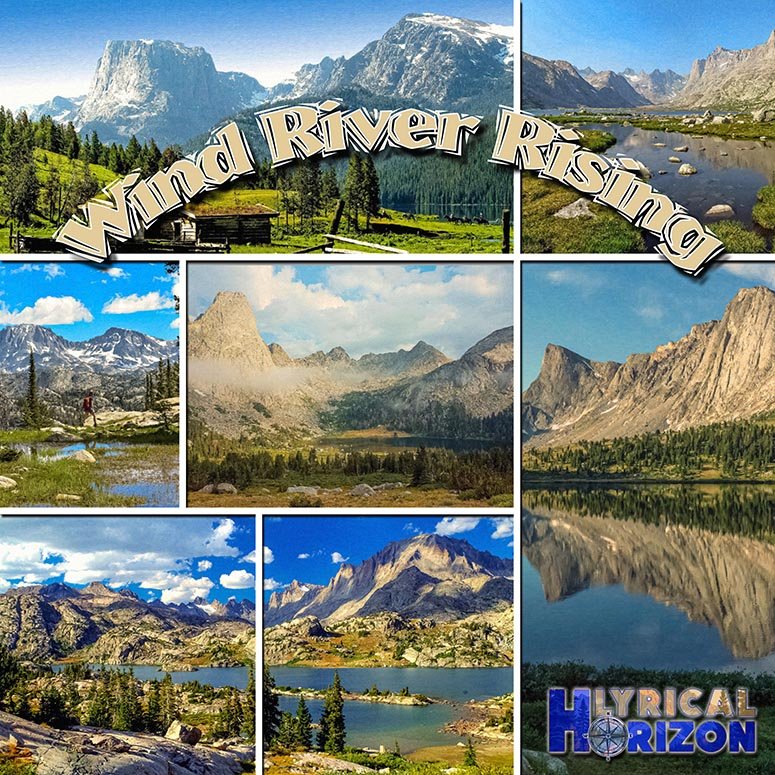
I wrote "Wind River Rising" as a companion to "The Winds of Time," the same range, the same Titcomb Basin and Gannett Peak, but I wanted this version's energy to rise rather than settle, wind river rising, wild and strong, where mountain spirits sing their song. Where the other telling asked for patience, I wanted this one to feel like the range asserting itself, thirteen thousand feet where goldens fly.
The story behind the song is the specific naming of Sacagawea's people, where Sacagawea's people roamed, because I wanted this version to carry that particular thread of history forward more directly, connecting the Shoshone presence in these mountains to one of the most consequential journeys in the country's history.
What I care about most is the closing image, where legends live in altitude, because I wanted this version to end on elevation itself as a kind of permanence, legends not preserved in spite of the height but because of it. Songs Across America has room to return to the same range twice, once patient and once rising, and both readings are true of a place this vast.
Reverent, atmospheric folk-rock built on layered vocals and a rising, driving chorus, structured as an ascent through the Wind River Range's peaks and sacred ground.
The Wind River Range as rising strength rather than stillness, Shoshone and Sacagawea heritage, legends preserved by elevation and remoteness, and mountain spirit as an active, living presence.
Primary Subject:
Wyoming's Wind River Range, its connection to Shoshone and Sacagawea heritage, and its rising, untamed peaks.
Mood:
Reverent and rising throughout, carrying strength and quiet awe in equal measure.
The same mountain range can be understood as ancient patience or as rising, living strength, and both readings honor a place whose legends live on precisely because of how high and how untouched it remains.
[Verse 1]
Wind River peaks touch Wyoming skies
Thirteen thousand feet where goldens fly
Shoshone stories in ancient stone
Where Sacagawea's people roamed
Glaciers carved these jagged walls
While winter's silence softly falls
[Chorus]
Wind River rising, wild and strong
Where mountain spirits sing their song
Sacred waters, ancient ways
Where the mountain meadows blaze
Winds of time still whisper here
Through the seasons of the year
[Verse 2]
Summer paints the alpine flowers
Purple lupine marks the hours
Indian paintbrush flames so bright
Under Gannett's snowy height
Medicine wheels mark sacred ground
Where ancestors' dreams are found
[Bridge]
Through Titcomb Basin's crystal streams
Below the Cirque of ancient dreams
Time stands still in wilderness
Where mountain spirits still possess
These untamed lands of solitude
Where legends live in altitude
[Verse 3]
Winter wraps the range in white
Northern lights dance in the night
Beneath the stars the stories flow
Of warriors walking long ago
Their wisdom echoes in the wind
Through endless time without end
[Verse 4]
Fremont's footsteps mark these trails
Where mountain-men left their tales
But long before the settlers came
The Shoshone knew these peaks by name
These mountains stand in majesty
Guardians of our history
[Final Chorus]
Wind River rising, wild and strong
Where mountain spirits sing their song
Sacred waters, ancient ways
Where the mountain meadows blaze
Winds of time still whisper here
Through the seasons of the year
"Wind River Rising" is an anthemic mountain song centered on Wyoming's Wind River Range. It portrays the range as a place of towering physical beauty, Indigenous memory, seasonal transformation, and spiritual endurance. The repeated image of the mountains "rising" refers not only to their elevation but also to their symbolic power. They rise above the plains, above recorded history, and above the temporary concerns of ordinary life.
The first verse introduces the scale of the range through thirteen-thousand-foot peaks and golden eagles in flight. The mountains immediately appear remote, elevated, and commanding. Their jagged walls were carved by glaciers, while snowfall continues to shape the experience of the range through silence, isolation, and seasonal change.
The reference to Shoshone stories acknowledges the deep cultural history of the region. The mountains are not presented as an untouched land waiting to be discovered. They were known, traveled, named, and interpreted by Indigenous peoples long before maps created by later explorers gave the peaks their present official names.
The mention of Sacagawea's people places the Wind River Range within a wider story of Shoshone life and movement. Rather than treating Sacagawea only as a figure connected to the Lewis and Clark expedition, the lyric restores her to a people and a homeland. Her presence points toward a much older network of trails, stories, seasonal routes, and relationships with the land.
The chorus gives the song its emotional and musical identity. "Wind River rising, wild and strong" is a bold, upward-moving phrase that could support a broad melodic lift. The range becomes almost animate as mountain spirits sing, winds carry old voices, and sacred waters continue flowing through the seasons.
"Ancient ways" refers to more than old trails. It suggests knowledge of the mountains, their animals, weather, plants, rivers, and sacred places. The chorus therefore connects physical geography with cultural continuity. The Wind River Range is valuable not merely because it is beautiful but because it holds accumulated meaning.
The second verse introduces summer in the high country. Lupine and Indian paintbrush bring color into the granite environment, while Gannett Peak rises snow-covered above the alpine meadows. The flowers are fragile and seasonal, yet they return each year beneath mountains that seem permanent.
The image of medicine wheels marking sacred ground gives the landscape a ceremonial dimension. It suggests that stone, direction, horizon, and sky may carry meanings not apparent to a casual traveler. The mountains become a place where natural beauty and inherited spiritual understanding overlap.
The bridge moves through Titcomb Basin and the Cirque of the Towers, two of the range's most dramatic alpine settings. Crystal streams, jagged peaks, and immense solitude create the sense of entering a realm beyond ordinary time. "Time stands still in wilderness" expresses the psychological effect of such places. The modern world seems distant, and the traveler becomes aware of a much larger timescale.
The phrase "where legends live in altitude" gives the bridge a mythic quality. Stories appear to remain suspended among the summits and high basins. The elevation separates this world from the towns, roads, and daily routines below, allowing it to feel protected and almost timeless.
The third verse shifts into winter. Snow covers the range, northern lights move across the sky, and old stories flow beneath the stars. The silence of winter reinforces the sense that the mountains are listening places where the past can still be felt.
The reference to warriors walking long ago adds gravity and continuity. Their lives have passed, but their wisdom "echoes in the wind." The song does not attempt to reconstruct specific events. Instead, it imagines memory as something carried through the natural world, surviving in place even when written records are incomplete.
The fourth verse acknowledges the arrival of explorers, trappers, and mountain men. Fremont's footsteps and the stories of later newcomers form part of the range's history, but the song deliberately places them after the Shoshone. This sequencing is important. It reminds the listener that Euro-American exploration was not the beginning of human knowledge in the region.
The final lines describe the mountains as "Guardians of our history." The range preserves more than scenery. It holds evidence of glacial change, ancient pathways, Indigenous life, exploration, wilderness traditions, and generations of human response to the mountains.
Musically, "Wind River Rising" would work well as a powerful folk-rock or Western Americana anthem. Acoustic guitar, low toms, fiddle, and sustained electric guitar could create a sense of upward movement. The chorus should feel broad and memorable, with layered harmony vocals reinforcing the word "rising."
The song's central meaning lies in the relationship between permanence and change. Flowers bloom and disappear, snow returns, people cross the mountains, and historical eras pass. The peaks remain, continuing to collect stories and send water toward the valleys below.
Ultimately, "Wind River Rising" presents the Wind River Range as a living cultural and natural monument. It is a song of reverence for a mountain world that remains wild, spiritually resonant, and inseparable from the people who knew it long before modern Wyoming took shape.














.jpg)