"Neon Playground©"
Lyrics by M. S. McKenzie (Unless Otherwise Noted) | Music Performed by Songs Across America or American Storyteller Music, All Songs Are Protected by ©
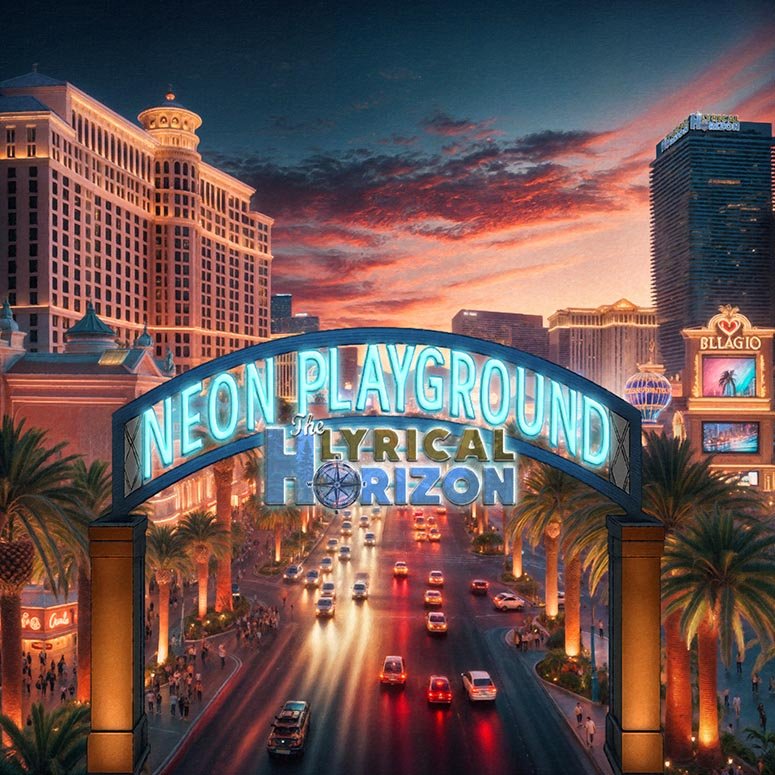
~ Associated Nevada State Links ~
"Neon Playground"
I wrote "Neon Playground" wanting the glamour and the hollowness of Vegas to arrive in the same breath, because I don't think you can honestly write about this city without both. Towers of glass where fortunes are won and fortunes are blown, slots play their siren song, and I wanted every image of dazzling excess to carry its own quiet cost sitting right next to it.
The story behind the song is the line I built the whole chorus around, beneath all the glitter and beneath all the glow, there's a hidden truth that all the locals know. I wanted that phrase, all the locals know, to matter, because the people who actually live in Las Vegas see past the fantasy in a way tourists rarely do, and I wanted the song to speak with that insider's knowledge rather than a visitor's wide-eyed wonder.
What I care about most is refusing to let the city be only one thing. Showgirls and Elvis impersonators and Bellagio fountains sit next to family-friendly roller coasters in the daylight, and then the city transforms again after dark. Songs Across America has room for a place this theatrical about its own contradictions, and I wanted the song to hold all of Vegas's faces at once rather than picking the postcard version or the cautionary one.
High-energy showtune-pop hybrid built on a theatrical, glittering chorus, structured as a day-to-night tour through the Strip's glamour and its underside.
Las Vegas as spectacle and cost held together, the gap between tourist fantasy and local knowledge, reinvention and risk, and a city that changes its face between day and night.
Primary Subject:
Las Vegas itself, its casinos, showgirls, wedding chapels, and family attractions, and the hidden cost beneath its dazzling surface.
Mood:
Theatrical, glittering, and knowingly bittersweet throughout.
A city built entirely on fantasy and reinvention can dazzle and deplete in the very same night, and the people who actually live there carry a hidden, clear-eyed knowledge of that truth that visitors rarely get to see.
[Intro: Instrumental]
[Verse 1]
Shimmering mirages rise up from a desert of sand and stone
Towers of glass where fortunes are won and fortunes are blown
Slots play their siren song as fountains dance in the night air
While yesterday's nobodies try to become tomorrow's millionaires
All bets are off when daylight fades, and the action never sleeps
In this neon playground built on dreams where debts run deep
[Chorus]
Vegas, Vegas, where the dice never stop rolling
Vegas, Vegas, where the champagne keeps on flowing
Beneath all the glitter and beneath all the glow
There's a hidden truth that all the locals know
This city just deals in fantasies...
...but all too often plays for keeps
While Lady Luck decides who laughs...
...she also decides who weeps!
[Verse 2]
Here the showgirls sparkle, while magicians make tigers disappear
In a city where Elvis still lives and plays fifty-two shows a year
From Bellagio's dancing fountains to Fremont Street's light show
High rollers, tourists and honeymooners are all just part of the show
A wedding chapel on each corner where vows are made in haste
'What happens here stays here' - at least that's what they say
[Verse 3]
Family-friendly in the light of day with roller coasters up high
Circus acts, and chocolate fountains might catch a child's eye
But when the desert sun sinks behind the Rainbow Mountains
The city transforms as adult appetites are far more clandestine
Cocktail waitresses with tired smiles serve yet another round
While dreams begin to circle the drain and then start to drown
[Bridge]
When dealers and dancers have had their fill of the grift
They travel beyond the Strip to where the real people live
Vegas is the city of contrasts, a city of pleasure and pain
One minute your on the high of your life...
...the next you've lost everything you gained
[Verse 4]
From mobsters, Rat Pack legends, and comedians to musical stars
Like the real Elvis Presley to Lady Gaga, they've all left their marks
A city that reinvents itself year after year and decade after decade
Where old casinos were imploded, in their place, new ones made
But beneath all this crazy spectacle and carefully-crafted allure
Is world-famous desert survivor with a heart both tough and pure
[Chorus]
Vegas, Vegas, where the dice never stop rolling
Vegas, Vegas, where the champagne keeps on flowing
Beneath all the glitter and beneath all the glow
There's a hidden truth that all the locals know
This city just deals in fantasies...
...but all too often plays for keeps
While Lady Luck decides who laughs...
...she also decides who weeps!
[Outro: Instrumental with casino sounds fading]
"Neon Playground" is a vivid, sharp-edged portrait of Las Vegas as a city built from spectacle, reinvention, risk, fantasy, and contradiction. The song celebrates the dazzling entertainment, historic performers, illuminated resorts, impulsive weddings, and larger-than-life mythology associated with the city, while steadily revealing the emotional and financial consequences concealed beneath its glamorous exterior.
The title captures the central paradox of the song. Las Vegas is a playground because it invites visitors to suspend ordinary rules, chase excitement, adopt temporary identities, and indulge desires that might remain restrained elsewhere. Yet this playground is illuminated by neon rather than daylight, suggesting that its pleasures are artificial, carefully engineered, and designed to become most powerful after dark.A playground is normally associated with innocence and harmless fun, but the song deliberately complicates that meaning. In this city, games involve real money, fantasies can become compulsions, and a night of entertainment can carry consequences long after the lights fade. The title therefore sounds inviting at first, but gradually becomes ironic.
The instrumental introduction could immediately establish a sleek and theatrical atmosphere. Bright synthesizers, electric piano, brass accents, rhythmic bass, and electronic percussion could evoke the Strip coming alive at sunset. Faint casino sounds, such as spinning reels, shuffling cards, electronic bells, and distant crowd noise, could appear beneath the music without overwhelming it.The first verse begins with Las Vegas rising like a mirage from the Mojave Desert. This is one of the song's strongest images because the city genuinely appears improbable within its environment. Glass towers, fountains, signs, and illuminated resorts emerge from a landscape of sand, stone, mountains, and extreme heat.
Calling the skyline a series of "shimmering mirages" suggests that Las Vegas is both physically real and psychologically deceptive. Like a desert mirage, it promises abundance, escape, and transformation, but what visitors believe they see may not always be what they receive.The towers of glass become monuments to fortune and loss. Within them, money changes hands continuously. Some visitors leave with winnings and unforgettable stories, while others lose savings, confidence, and control. The parallel phrasing of fortunes "won" and "blown" makes success and ruin feel like adjacent outcomes separated by a single decision.
The slots sing a "siren song," invoking the mythological creatures whose beautiful voices drew travelers toward danger. Casino machines attract players with sound, light, repetition, and the possibility of sudden reward. Their music appears welcoming, but the metaphor warns that the invitation may lead somewhere destructive.The dancing fountains create a contrasting form of spectacle. Water rises elegantly into the dry desert air, producing beauty through choreography, lighting, music, and engineering. This image captures Las Vegas's determination to construct the improbable and turn excess into entertainment.
"Yesterday's nobodies" hoping to become "tomorrow's millionaires" describes the city's promise of instant reinvention. Las Vegas allows people to imagine that one lucky roll, one winning hand, one successful audition, or one unexpected opportunity could change everything.The line also reaches beyond gambling. Performers, entrepreneurs, dealers, entertainers, tourists, and dreamers have all arrived hoping to become someone different. The city sells not only games but identities.When daylight fades, ordinary limitations appear to disappear. "All bets are off" works as both a gambling expression and a description of behavior. The city becomes more intense at night, and its promise of freedom grows stronger as the action continues without sleep.
The final line of the verse introduces the song's warning. The neon playground may be built on dreams, but its debts can run deep. Those debts may be financial, emotional, relational, or physical. A person can owe money, lose trust, damage a marriage, exhaust the body, or discover that the escape they purchased has followed them home.The chorus delivers the song's most memorable public image of Las Vegas. Repeating "Vegas, Vegas" gives it the feel of a chant, advertisement, or crowd response. The rolling dice and flowing champagne capture the city's image of endless motion, celebration, and abundance.
The chorus then moves beneath the glitter. This downward movement is essential to the song's structure. The listener is invited to enjoy the lights but also to look below them.The "hidden truth that all the locals know" separates the tourist version of Las Vegas from the lived city. Visitors may experience a resort corridor designed around fantasy, while residents see shift work, rent, traffic, exhaustion, service labor, addiction, heat, neighborhoods, schools, families, and ordinary survival.
The declaration that the city "deals in fantasies" uses the language of card games. Las Vegas distributes fantasies as a dealer distributes cards. Each visitor receives a possible story: sudden wealth, romantic escape, celebrity treatment, sexual freedom, reinvention, or temporary importance.The phrase "plays for keeps" introduces the cost. The house does not participate casually. Casinos and resorts are structured businesses, and the consequences of poor decisions may be lasting. The city may sell fantasy, but it often collects payment in reality.Lady Luck becomes an unpredictable figure deciding who laughs and who weeps. This personification captures gambling's emotional volatility. Celebration and despair may exist only a few feet apart at neighboring tables.
The chorus does not claim that every visitor loses or that all entertainment is fraudulent. Instead, it emphasizes uncertainty. Las Vegas can produce genuine joy, but it offers no guarantee that the dream will end well.The second verse celebrates the theatrical mythology of the city. Showgirls, magicians, exotic illusions, Elvis impersonators, and extravagant productions create a world in which reality is constantly being altered for entertainment.The reference to magicians making tigers disappear evokes an earlier era of large-scale Las Vegas illusion shows. Whether the animals, performers, or productions are literal or nostalgic, the image reinforces the city's long fascination with spectacle that seems impossible.
The line about Elvis still living humorously acknowledges the continuing presence of tribute performers. The real Elvis Presley is gone, but versions of him remain everywhere through impersonators, wedding officiants, stage acts, souvenirs, and the city's carefully preserved entertainment mythology.Having Elvis perform "fifty-two shows a year" gives the joke a businesslike quality. Even immortality in Las Vegas comes with a schedule.Bellagio's fountains and the Fremont Street light show represent two different forms of Las Vegas spectacle. The Strip offers polished resort grandeur, while Fremont Street preserves and reimagines the neon identity of downtown.
High rollers, tourists, and honeymooners are described as part of the show. This is an important observation because Las Vegas visitors do not merely watch the city. They perform within it. Clothing, behavior, spending, celebration, and public excitement all contribute to the spectacle.The wedding chapels introduce another form of accelerated fantasy. Couples can transform their lives quickly, sometimes sincerely and sometimes impulsively. The phrase "vows are made in haste" suggests both romance and questionable judgment.
"What happens here stays here" appears as the city's famous promise of consequence-free behavior, but the lyric immediately casts doubt upon it. Experiences may remain private, yet emotional, financial, medical, legal, or relational consequences do not always stay behind.
The third verse explores Las Vegas's effort to present itself as family-friendly while continuing to depend heavily upon adult entertainment and gambling. During daylight hours, roller coasters, circus acts, elaborate attractions, and chocolate fountains create an atmosphere accessible to children.These attractions are not necessarily false or unworthy, but the verse suggests that they represent only one layer of the city. As the sun sets, Las Vegas reveals another identity.The transformation after dark is central to the song. The city does not simply become brighter. Its motivations become more openly adult. Alcohol, gambling, nightlife, sexuality, and secrecy move to the foreground.
The reference to adult appetites being clandestine suggests that visitors may seek experiences they would hide from family, employers, friends, or even themselves. Las Vegas offers anonymity, but anonymity can encourage both liberation and recklessness.The cocktail waitress with a tired smile is one of the song's most important human images. She represents the labor beneath the fantasy. Her smile is part of the service being sold, but exhaustion exists behind it.She serves "yet another round," implying repetition, long shifts, and the emotional effort required to remain welcoming amid intoxication, noise, and demanding customers. For visitors, the drink may mark a special night. For her, it is one more task within a working day.
The image of dreams circling the drain introduces a darker emotional turn. Earlier dreams concerned sudden wealth and transformation. Here they begin to collapse beneath gambling losses, intoxication, desperation, or disappointment.The movement from circling to drowning suggests a gradual loss of control. The dream does not disappear instantly. It spirals downward while the person continues hoping to recover it.The bridge leaves the Strip and travels into the residential city. Dealers, dancers, bartenders, hotel workers, performers, cooks, cleaners, security officers, drivers, and countless others eventually leave the carefully constructed fantasy and return to ordinary neighborhoods.
The reference to workers having "had their fill of the grift" carries a cynical edge. It suggests that some of them understand the machinery of illusion more clearly than the visitors do. They help sustain the fantasy while recognizing its manipulations.Beyond the Strip is "where the real people live." This does not mean that the entertainment district is unreal in a literal sense. It means that the public image of Las Vegas often erases the large community required to operate it.
Residents have homes, families, schools, illnesses, bills, relationships, and ambitions unrelated to casinos. The bridge reminds the listener that Las Vegas is a functioning city, not merely an adult amusement park.Calling Las Vegas a city of pleasure and pain summarizes the song's emotional duality. It can generate exhilaration, employment, artistry, celebration, and unforgettable experiences. It can also produce addiction, debt, loneliness, exhaustion, and loss.
The movement from the "high of your life" to losing everything captures how rapidly fortune can reverse. The word "high" may refer to excitement, intoxication, financial success, or a feeling of personal invincibility.The correct grammatical form in the line would be "One minute you're on the high of your life." This small adjustment would preserve the lyric's meaning while improving its written presentation.
The fourth verse places modern Las Vegas within its historical lineage. Mobsters, the Rat Pack, comedians, singers, magicians, dancers, and contemporary stars have each contributed to the city's mythology.The mention of the real Elvis Presley distinguishes him from the impersonators described earlier. He represents a period when Las Vegas residencies became essential parts of major performers' careers and the city's entertainment identity.Lady Gaga represents a later generation of artists who continue that tradition. Placing her beside earlier legends shows how Las Vegas absorbs each era of popular culture and reshapes itself around new audiences.
The city's repeated reinvention becomes the verse's central theme. Las Vegas rarely treats its own history as untouchable. Resorts that once defined the skyline may be imploded and replaced by newer, larger, more technologically advanced attractions.The demolition of old casinos is both practical and symbolic. Nostalgia exists, but it often yields to redevelopment. The city survives by destroying parts of its former identity and constructing new fantasies in their place.This cycle makes Las Vegas feel temporary and permanent at the same time. Individual buildings disappear, yet the larger promise of spectacle continues.
The final lines reveal the affection beneath the song's criticism. Under the carefully crafted allure is a "world-famous desert survivor" with a heart that is "tough and pure."This ending prevents the song from becoming merely condemning. Las Vegas may manipulate desire, but it is also a resilient community built in an unforgiving environment. It has survived economic downturns, changing tastes, scandals, demolitions, reinventions, and the practical challenges of sustaining a major city in the Mojave Desert.
The "tough" heart belongs to the workers and residents who keep the city functioning. The "pure" heart may refer to the genuine humanity beneath the artificial surfaces: people working, performing, raising families, helping strangers, pursuing careers, and building lives beyond the casino floor.The repeated final chorus returns to the central contrast between fantasy and consequence. By this point, the listener has seen both the tourist spectacle and the world behind it.The rolling dice and flowing champagne remain appealing, but the lines about Lady Luck now carry greater weight. The listener understands that every celebration takes place within a system where someone else may be losing.
The instrumental outro with fading casino sounds is especially appropriate. As the music ends, bells, chips, reels, cards, voices, and electronic tones could continue briefly, implying that the city's activity never truly stops.The fading sounds may also suggest a visitor leaving the casino floor and stepping back into the desert night. The spectacle recedes, but the experience and its consequences remain.Musically, "Neon Playground" could work as a polished pop-rock, synth-rock, funk-influenced adult contemporary, or theatrical Americana song. Its arrangement should sound glamorous and energetic while preserving a slightly darker current beneath the surface.
The introduction could feature a pulsing bass line, bright electric piano, crisp drums, synthesizer accents, and a short brass motif. Casino effects should function rhythmically rather than appearing as random decoration.The verses could use a steady, prowling groove that mirrors movement along the Strip. Clean electric guitar, synth bass, and restrained percussion would provide momentum while leaving room for the detailed lyrics.
The chorus should expand dramatically. Layered backing vocals repeating "Vegas, Vegas" could create the feeling of a show opening or a crowd joining the hook. Brass, fuller drums, and rising strings could reinforce the glamour.The melody should darken slightly on "beneath all the glitter" and "plays for keeps." This harmonic shift would expose the danger hidden inside the celebratory chorus.
The second verse could add playful musical details to accompany the references to magicians, Elvis impersonators, fountains, and wedding chapels. Brief flourishes of brass, organ, or theatrical percussion might capture the city's sense of humor.The third verse should become more restrained and uneasy. The arrangement could thin beneath the tired cocktail waitress and descending dreams, allowing the lyrics to carry more emotional weight.The bridge could move into a lower register, with heavier bass and less glittering instrumentation as the song travels beyond the Strip. This section should feel grounded in the lives of residents rather than the fantasies sold to tourists.
The fourth verse can rebuild the arrangement through references to Las Vegas history and continual reinvention. Archival-style musical touches could briefly suggest lounge music or classic show-band arrangements before returning to the modern chorus.The final chorus should be the largest section, with full drums, layered vocals, brass, synths, and electric guitar. However, the delivery should retain enough tension that it does not become an uncomplicated celebration.
The outro could gradually strip away the instruments until only casino ambience remains. A final slot-machine tone or rolling chip could echo briefly before silence.At its heart, "Neon Playground" is a song about the machinery of desire. Las Vegas does not create every dream, appetite, or weakness it encounters. Instead, it recognizes them, magnifies them, packages them, and sells them back beneath brilliant lights.
The song also recognizes that fantasy has genuine value. People travel to Las Vegas to celebrate marriages, birthdays, achievements, friendships, performances, and temporary freedom from ordinary life. The city's pleasures are not inherently false simply because they are constructed.The danger appears when fantasy is mistaken for permanence or when entertainment becomes compulsion. The city may provide the stage, but visitors still bring their own hopes, vulnerabilities, and choices.Most importantly, the song looks beyond the casinos to the people who sustain them. Tired waitresses, dealers, dancers, performers, service workers, and local families reveal the human city behind the international image.
"Neon Playground" is therefore both a vibrant Las Vegas anthem and a cautionary tale. It admires the city's energy, creativity, resilience, and unmatched ability to reinvent itself while refusing to ignore the debts, disappointments, and human labor beneath the glow.Its final message is that Las Vegas can be exhilarating, beautiful, absurd, generous, and unforgiving at the same time. Lady Luck may provide the fantasy, but the real heart of the city belongs to the desert survivors who remain after the tourists, winnings, champagne, and neon dreams have faded.










.jpg)